
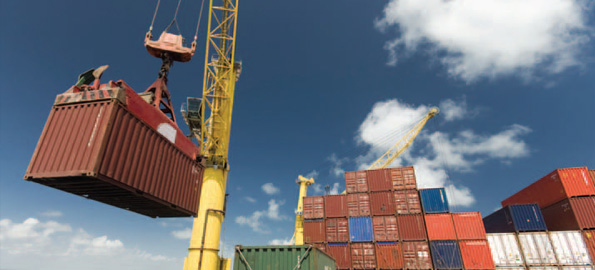
Trade finance and treasury management in MENA is moving towards more sophistication. Syed-Kamran Zaidi, Deutsche Bank’s regional head of trade finance and cash management corporates, assesses the latest developments in the region
There is no escaping the fact that these are uncertain times. The socio-political unrest in the Middle East combined with the ongoing turbulence in the global financial markets has exerted a negative short-term impact on MENA trade.
While the GCC oil exporters with substantial dollar receipts and relatively small populations – Kuwait, Oman, Qatar, Saudi Arabia, and the UAE – are in a better position to absorb possible economic shocks, MENA’s non-oil exporting economies are largely dependent on the turbulent European market. And as the eurozone crisis shows no signs of abating, this is unquestionably a cause for concern for the MENA region.
Further regional pain points include the political uncertainties of the Arab Spring, now into its second year, and the consequent rise in the region’s risk profile. And then there is the almost constant negative media coverage of the global economic situation, which is doing precious little to allay the fears of nervous regional investors.
That said, there are many reasons to remain positive. Global demand for MENA’s commodities was consistently high throughout 2011 and, as a result, the region’s trade flows remained relatively stable. Evidence of this solidity lies in the growth of corporates in both the Kingdom of Saudi Arabia (KSA) and the UAE. Similarly, due to their comparatively stable political systems, the Gulf economies (with the exception of Bahrain) have been able to enjoy steady financial environments amid the political upheavals of 2011.
While this is all welcome news, the greatest cause for positivity is, perhaps, the region-wide expansion in trade with Asia – most notably India and China. The spectacular economic rise of these countries over the previous two decades has accelerated their trade and investment flows with the MENA region, particularly with the oil-producing countries.
Looking at China in particular, this is now Africa’s largest trading partner. Bilateral trade grew enormously between 2001 and 2010, and is expected to rise further still over the coming years.
The new demands
As the strongly trade-orientated Gulf economies are set to remain highly active – indeed proactive – with respect to cross-border commerce, the corporate need for “top end” or “next generation” treasury solutions that converge cash and trade has increased accordingly. This is largely in response to the growing recognition that it is both difficult and inefficient to work in trade and treasury silos, but also reflects today’s need for the increased sophistication of transaction processing visibility and risk management.
For MENA, sophistication does not mean abandoning its traditional, conservative trade roots. The region as a whole has historically exhibited an aversion to risk, which has stood it in good stead. MENA’s conservatism is reflected not only by its continued appreciation of the traditional letter of credit (LC) as a trade instrument, but the increasing influence of Islamic finance on the region’s treasury management practices.
 The tenets of Islamic finance – increased transparency and the forbidding of interest, speculation and contingent speculative liability in any transaction – are greatly respected in the current climate. This is the case for both MENA and beyond. As economic turmoil continues, appreciation for the benefits of comparatively low-risk treasury structures is spreading and many corporates are seeking to employ solutions that follow the principles of Islamic finance.
Although the MENA region is adopting an increasing focus on its conventional trade methods and structures, this does not mean that the region is behind the times. Sophistication in MENA now means combining risk-mitigation with the type of speed and efficiency associated with open account trade, and this is leading to an increasing demand for fully-integrated trade and treasury solutions.
Integrated solutions can provide the security of LCs, with the speed and efficiency of open account trade, which can enhance both the risk and working capital management processes by improving transparency and driving efficiency throughout the supply chain.
As regional corporates become increasingly aware of these benefits – and seek to make optimal use of electronic banking solutions – cash and trade convergence is expected to rise in popularity alongside the emergence of end-to-end supply chain financing solutions.
Indeed, trade finance has yet to be fully exploited by the region as a whole. While some of the MENA’s economies – such as the UAE – are more developed in transaction banking terms than others, the “efficiency gap” can be bridged by advanced technology as it becomes more widely available and local banks undergo an educational process. This is an area in which global banks operating in the region, such as Deutsche Bank, can offer both solutions and expertise.
Looking forward
 MENA may be seen as a “crossroads” region in two ways. First, in terms of geography, it is where trade flows and business trends from so many other economies converge. This means that local banks and corporates must be receptive to the major international banking trends and technologies. Gulf banks have tended primarily to focus on the needs of the small-medium enterprise segment (the bulk of their client base) and this has led to narrow expertise in generally less complex solutions. Yet as international trade – particularly with Asia – grows, local banks cannot afford to think in terms of purely local demand: and not least because even domestic corporate requirements will become more sophisticated.
Secondly, MENA is at a turning point in terms of banking sophistication. While some of the region’s economies are more advanced in terms of solutions provision than others, levels of sophistication are increasing across the board. All major companies are looking to generate internal efficiencies as well as enhance risk, working capital and liquidity management practices.
And given the speed with which technology is evolving, proprietary development (and upkeep) of sophisticated solutions is an unfeasible strategic choice for the majority of local banks. As a result, there is a growing trend for smaller banks to outsource to global banks and technology providers.
Yet, when it comes to selecting a global partner, care is required. The strategy behind any proffered solutions is as important as the solutions themselves, and the importance of both sector and regional expertise cannot be overstated.
As an experienced and trusted global solutions provider, Deutsche Bank’s strategic focus and commitment to the MENA region’s economic development is evidenced by its strong regional presence and ongoing investment in technology innovation, which means it is able to combine an on-the-ground presence with regional, global and sector expertise, as well as market-leading solutions.
And this can support the MENA region’s growing trade sophistication throughout 2012 and beyond.