
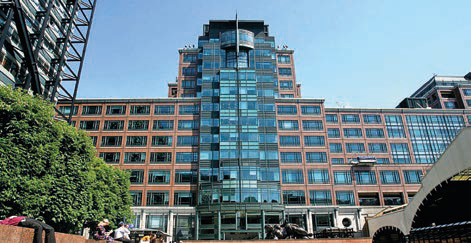
The Islamic Corporation for the Development of the Private Sector is at the forefront of a massive drive to support SMEs. MUSHTAK PARKER reveals who will benefit
Due to celebrate its 15th anniversary in 2015, the Islamic Corporation for the Development of the Private Sector (ICD), the private sector funding arm of the Islamic Development Bank (IDB) Group, is a multilateral on the move.
With investments in some 35 entities and increasing, it has embarked on a restructuring that will devolve its various activities into streamlined holding companies in asset management, leasing (Ijara), financing through lines of credit and equity investments, primarily in Islamic banks, into stand-alone holding companies each with its own specialised management.
The corporation is at the forefront of driving the private sector in the 56- member countries of the Islamic Development Bank (IDB) to help contribute to the achievement of the 20 per cent target for intra-Islamic trade by 2015 set by its parent, the IDB. There is no doubt that the focus of the ICD, like other stand-alone entities of the IDB Group including the Islamic Corporation for the Insurance of Export Credits and Investment (ICIEC), the export credit agency of the IDB Group; and the International Islamic Trade Finance Corporation (ITFC), its trade finance fund is MENA-centric.
For instance, the ICD has approved $2.17bn worth of financing for 219 projects since its inception. But as the figures show for 2012, some 54 per cent of the corporation’s investment approvals went to the Middle East and North Africa (MENA) region; 22 per cent to Asia; and 12 per cent each to the CIS and Central Asia and Sub-Saharan Africa. The same pattern emerges for ITFC and ICIEC.
The pressure is on ICD (like ICIEC and ITFC), to diversify its activities to other regions, including Central Asia, South and South East Asia and Africa. In fact, given that some 21 IDB member countries are from the Sub-Saharan African (SSA) region, ICD, confirmed Khaled Al- Aboodi, its Saudi chief executive officer, “is interested in expanding its work in Africa. Over the last three years some 14 per cent of our portfolio was directed to Africa. This is much smaller than our objective. We are looking at several ways of expanding our funding activities in Africa”. Similarly, the ICD has expanded its activities in Central Asia over the last two years especially in establishing Islamic leasing (Ijara) companies in Azerbaijan, Kazakhstan and Uzbekistan.
However, the reality remains that the MENA region will remain the major focus for ICD especially in the wake of developments in the so-called Arab Spring countries undergoing political and economic transition, where the urgency of investing in projects aimed at generating youth employment in particular is paramount.
But, as Al-Aboodi revealed, although 2013 was a good year for the corporation in general, it did experience some setbacks in markets such as Yemen and war-torn Syria where it has had some exposure. On the other hand, exposure to the mother of all the Arab Spring countries, Egypt, has been minimal simply because the ICD has not done much business in the country.
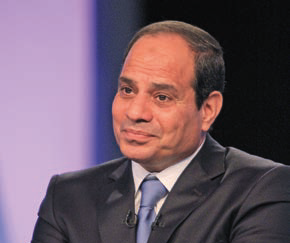
This, though, is about to change in a dramatic fashion following the swearing in of General Abdul Fattah al-Sisi as the new President of Egypt in early June 2014.
The IDB Group, whose biggest equity subscriber by far is Saudi Arabia with Islamic dinar (ID) 4,249.6m (One ID = One Special Drawing Rights of the International Monetary Fund (IMF) and a whopping 23.62 per cent of the voting rights of the bank, takes its cue from Riyadh. The Kingdom has been extremely generous in its quantitative support of the multilateral development bank, which was established at the suggestion of the late King Faisal of Saudi Arabia in 1975.
Saudi King Abdullah notably telephoned President al-Sisi before his inauguration to pledge the Kingdom’s support for the country’s economic development. In fact, Riyadh suggested convening a “Friends of Egypt” conference, which would raise funds for the country to weather its current economic crisis. GCC bankers expect a flood of GCC, UAE and Kuwaiti funds to flow into Egypt, although whether these inflows become sustainable will depend on the political stability of the country and the economic agenda of the al-Sisi government.
The IDB Group, ironically, pledged a $10bn funding programme to the government of ousted President Mohammed Morsi, to which it was perhaps ideologically closer. The Bank, like the Islamic finance movement, always had an awkward relationship with the regime of President Hosni Mubarak, which cynically and erroneously viewed the industry as the financial extension of Political Islam.
The pressure will now be on IDB to re-offer this pledge of $10bn support, if not more, to Cairo. The IDB in the recent past has also allocated a $250m fund to support projects in Egypt, Tunisia and Libya (the three north African Arab Spring countries) primarily aimed at generating youth employment.
Perhaps it is not a coincidence that the ICD signed an agreement in early June 2014 in Jeddah with the Saudi-Egyptian Business Council, which operates under the umbrella of the Saudi Ministry of Trade and Industry and the Egyptian Ministry of Industry and Investment, on the co-operation between ICD and Saudi companies interested in investing in Egypt.
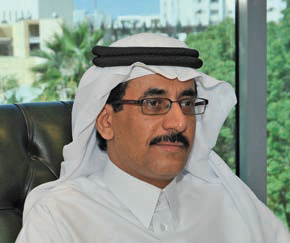
“The Saudi-Egyptian Business Council and ICD,” emphasised Abdullah Bin Mahfouz, the chairman of the Saudi-Egyptian Business Council, “share a mission of supporting Saudi private sector investments in Egypt.”
According to the Business Council, Saudi investment in Egypt to date has amounted to $27bn.
Perhaps not coincidentally, ICD, the private sector arm of the IDB Group, started to get directly active in Egypt just before the accession of President al-Sisi. The corporation in May further signed two important agreements involving Egypt.
To achieve its objectives, the ICD is cooperating with other multilaterals and international banks in delivering various products and services. For example, it has signed a memorandum of understanding (MoU) with the European Bank for Reconstruction and Development (EBRD) under which the two entities would collaborate to support small-and-medium-sized enterprises (SMEs) in Egypt, Jordan, Morocco and Tunisia.
Under the terms of the MoU, the EBRD and the ICD will establish a $120 million investment fund to develop and to support financially SMEs across the southern and eastern Mediterranean region (SEMED) through innovative Islamic financial structures, including equity and quasi-equity investments. Both ICD and EBRD will seed the fund and then invite institutional investors and donors to participate through additional investment.
EBRD president Sir Suma Chakrabarti said at the signing of the MoU, “We are delighted to launch our collaboration with ICD based on their knowledge of the region and on our successful track record in SME financing. The SME Funds Programme will improve access to finance for SMEs – the backbone of the economy and fertile ground for job creation.”
Khaled Al-Aboodi, ICD’s Saudi chief executive Officer explained that the SME Funds Programme, focusing on launching and managing investment vehicles with a successful track record, would also provide technical assistance to financial institutions and investee companies. The programme, he added, is not only supporting access to finance but also favouring inclusive growth.
In May, ICD also arranged an EGP2.5bn ($372m) Islamic Senior Mezzanine and Working Capital Facility for Al Nouran Multi-trading (ANM), Egypt’s leading private sector sugar trading house. This will be used inter alia to finance the building of a new mega sugar production facility to be located in Al Sharkia Governorate.
ICD will provide a financing package, including equity investment, mezzanine financing and standby guarantees of up to $46m as well as in playing a key role in arranging and structuring equity investment and mezzanine financing from other sources.
The main participants in the Mezzanine Facility, according to ICD, are the Arab Fund for Economic and Social Development (AFESD), the SociétéArabeInternationale de Banque (SAIB) as well as ICD. Other financing participants include the local BanqueMisr, Bank Audi of Lebanon, Abu Dhabi Islamic Bank and the state-owned Egyptian Sugar and Integrated Industries Company (ESIIC).
The Al Nouran Sugar project is projected to produce and refine more than 500,000 metric tons of sugar annually. It is considered a key investment in the Egyptian agribusiness sector with the potential to reduce the country’s reliance on imported sugar by up to 25 per cent, generating around 800 new direct jobs and thousands of indirect jobs associated with sugar production. The facility is expected to begin operations in 2016.
Al-Aboodi explained that the corporation “hopes to promote an example of mobilizing investments through cooperation with development financial institutions, local banks and leading public/private investors in response to key developmental priorities, including food security which is important across many of our member countries. We are proud to be involved in similar projects to help address such challenges in Egypt and other MENA markets in general”.
The IDB Group is also under sustained pressure to establish definitive connectivity between its financing and real economy developments and returns in its member countries. Al-Aboodi is very keen that ICD financing and activities can portray and sustain a demonstration effect. These include the objectives of investing in poverty alleviation, employment generation and the development of the private sector.
“We have created a set of indicators to measure the development impact of these projects. In small countries such as the Maldives the impact is huge. We have a small investment in a bank there, which we helped set up last year. This has led to 26,000 customers, which is about 30 per cent of the bankable population. The Islamic Bank of Maldives is also the first to start Shariah-compliant mortgage finance in the country,” he maintained.
However, he warns that “development impact is not about the whole economy but what is do-able in certain areas. ICD financing is not a panacea for the economy and country”.
Al-Aboodi is adamant that he has seen major changes in the state of the private sector in member countries over the past five years or so. “Things have changed. We are now seeing the emergence of SMEs, which are run and owned by local nationals. In the past, these enterprises were owned by foreign interests. This is a major focus for ICD as at the end of the day this is their homeland. We are not there to make a few investments and then exit by selling on to others. We are there to invest and help the local businessmen and people to achieve their potential by facilitating the technical expertise and financing to allow them to do that,” he added.
At the same time, Khaled Al-Aboodi, has set out the priorities for the corporation for the next two years, which include establishing more dedicated Islamic leasing (Ijara) companies; the establishment of more targeted Shariah-compliant SME Funds; and to increase the lines of financing it extends to banks and corporates. The corporation’s financing is exclusively done on Islamic financial principles.
Also in May, the corporation signed another memorandum of understanding with the Bank of Tokyo-Mitsubishi UFJ (Malaysia) Berhad – to form a joint strategic collaboration to tap opportunities in the constantly evolving Islamic finance industry especially in the ICD’s member countries globally, including the MENA Region.
Al-Aboodi, speaking during the MoU signing ceremony in Tokyo in the presence of Naoki Nishida, CEO of Bank of Tokyo-Mitsubishi, explained that the MoU will strengthen and deepen ICD’s relationship with its non-traditional partners from the Pacific region especially in promoting cross-border investment in ICD member countries and sharing Islamic finance knowledge and expertise.
“Japan has shown growing interest in further developing its Islamic finance industry. We are delighted with this initiative as we always viewed the South East Asia and the MENA regions as the Islamic finance hubs for us to engage new relationships with the non-traditional partners in the Pacific region and Asia such as Japan, China, Australia and Korea, and to collaborate on joint projects, resource mobilisation and reverse linkages,” he added.
Al-Aboodi, is a passionate supporter of the economic development of member countries through the provision of finance (either directly or through co-financing) to private sector projects, especially SMEs that are specifically geared to creating employment and boosting exports; and that encourage the development of Islamic financing and capital markets.
Two proven areas of focus for the ICD are establishing leasing companies and SME Funds in IDB member countries, which it has done in several countries to date. Financing SMEs is a major part of the corporation’s mandate. “We are using our experience in Tunisia and Saudi Arabia where we created successful SME funds to see how we can apply it to other member countries that can host such a fund,” he added. The ICD-sponsored SME fund in Tunisia, according to Al-Aboodi, is doing well and the corporation is targeting “another investment in the financial sector and we expecting more in the pipeline now that the Tunisian government is doing positive things in reaching out to foreign investors”.
Recently ICD has set up the joint venture Palestine Ijara Company (PIC), in partnership with the Palestine Investment Fund (PIF) and the Palestine Islamic Bank (PIB). Also the corporation is in the process of setting up its 18th Ijarahcompany in Dakar, Senegal, a company that will serve the region.

PIC is the first such Ijaracompany to be established in Palestine. The financial instruments offered by PIC, according to Palestinian Deputy Prime Minister for Economic Affairs and chairman of PIF, Mohammed Mustafa, is expected “to add depth to the Palestinian financial sector and to benefit the Palestinian SME sector through the offering of multiple leasing products that are new to Palestine”.
PIF will be executing this transaction through its specialised SME investment and financing arm, the Sharakat Fund.
The establishment of PIC, maintained Bayan Qasem, acting general manager of the Palestine Islamic Bank, “marks a significant milestone in the development of the Palestinian Islamic financing sector. PIC’s work will complement the Palestine Islamic Bank’s efforts to strengthen the presence of Islamic-banking in Palestine”.
PIC will offer asset-based Ijara financing to SMEs in various economic sectors, including agribusiness, industry, construction, education, health care, and tourism. The financing will range between $100,000 and $1m per transaction, and will aim to grow the operations of SMEs and, ultimately, to create many new job opportunities in Palestine.
Similarly, last year, ICD teamed up with Tunisia’s Caisse des Dépôtset Consignations (CDC), ITFC, Kipco, United Gulf Financial Services, and Albaraka Bank Tunisia, to launch a $30m SME fund, Theemar Investment Fund, the largest such fund in the country.
In the African context, ICD does this either through direct equity positions or through Tamweel Africa Holding (TAH), its joint venture with Turkish participation bank Asya Bank. TAH, which is headquartered in Dakar, manages ICD’s portfolio of Islamic banks in Sub-Saharan African countries.
“Islamic finance is growing in popularity and already a majority of retail and corporate banking clients prefer the option of Islamic banking over conventional banking when available. Our operations and dealings are on the basis of Islamic banking principles and also support the establishment and finance of Islamic financial institutions not only in the MENA region but also in the wider Asian and African spheres,” explained Khaled Al-Aboodi.
In the field of co-investment, the corporation recently signed two important agreements – one with the Emirates Future (EF) with the support of Sheikh Mansour bin Zayed Al-Nahyan, deputy prime minister and minister of presidential affairs in the UAE.
Under the agreement, the two sides aim:
- To promote economic development and encourage the flow of investments between member countries through the creation, expansion and modernization of institutions and private sector companies
- To establish a strategic partnership in order to strengthen the system of food security in the Islamic world and developing the halal food industry
- To improve halal food quality and reliability using the latest food technology, agricultural research and certification systems around the world
- To develop a plan of joint cooperation to enter new markets, investments insurance and building strategic alliances with the relevant companies in ICD’s Members countries
- To examine the possibility of establishing an investment partnership with EF in order to create and manage hubs of manufacturing, packaging, certification and distribution of halal food around the world
- To set up a Food Security and Agribusiness Fund with a group of investors in the Gulf region
- o explore the possibility of establishing an international company to manufacture and distribute halal gelatin.
According to ICD’s Khaled Al-Aboodi, “the co-operation between ICD and EF will make their activities more effective and useful for the sectors of food security and halal food all over the world. The partners fully realise the multiple benefits that they will gain through this cooperation”.
Similarly, Humaid Al-Neyadi, chairman of Emirates Future Group, maintained that “the coordination between the private sector and the international development institutions has a big role in developing the food security sector in the Islamic world and boosting the development halal food industry around the world, including the support to overcome the obstacles and ensure the economic feasibility of this sector”.
In Morocco, the ICD similarly signed an agreement with Al-Ajial Funds, a subsidiary of Al-Ajial Investment Fund Holding, one of the most prominent investment vehicles in the Kingdom established by the Kuwait Investment Authority (KIA) in 2006, on the sidelines of the G8 Deauville Partnership Investment Conference in Skhirat in April this year, whereby the two entities agreed to co-invest in potential projects within Morocco’s private sector.
Morocco, according to ICD, benefits from a dynamic private sector, with the second highest concentration of existing entrepreneurs in the MENA region. The Kingdom, with an economy in continuous expansion, has established a strong business environment that is politically stable and encourages development of the private sector.
“ICD is particularly interested in Al-Ajial Funds’ experience in supporting Morocco’s private sector and its strong record of successful accomplishments. Joining our forces to accompany the development of Morocco’s private sector is an important milestone for ICD’s investment strategy in the Kingdom,” explained Khald Al-Aboodi.
The mandate of Al-Ajial Funds is to contribute actively to the economic development of Morocco by encouraging important wealth generating sectors through diversified investments. The fund operates in various sectors including real estate, tourism, industry and finance.
The ICD is also emerging as an important facilitator and adviser on sovereign Sukuk issuance, especially those sovereigns that are rated either investment grade or below. Already the corporation is advising Yemen, Tunisia and Senegal on their debut international Sukuk issuance.
Khaled Al-Aboodi confirmed that much progress on the issuance of Senegal’s debut Sukuk has been achieved and it is only a matter of time before the Senegal Government announces the roadshow and the issuance of the Sukuk.
He hopes that sovereign Sukuk issuance will also allow the private corporate sector to raise funds this way, albeit this will depend on the size of the issuance. The bigger the size, the lower the cost of issuance.
However, he maintains that private Sukuk can be much cheaper than public Sukuk. Islamic financial institutions, however, are in dire need of short-term Sukuk to manage their liquidity.
As such, “Senegal is an important pilot issuance. We need to focus to make it cost effective.”
He agrees that the Sukuk Insurance Policy being rolled out by the Islamic Corporation for the Insurance of Export Credit and Investment (ICIEC), the export credit agency of the IDB Group, will help in terms of credit enhancement and making sovereign issuances by investment grade or below issuers more attractive.
“The ICIEC product is excellent and they have just started to market it. I am sure it will reduce the price for many countries and will increase the attractiveness of Sukuk. We are working closely with ICIEC, which will be involved in guaranteeing a portion of these Sukuk”, said Al-Aboodi.