
The National Bank of Bahrain (NBB) continues to strengthen its position in trade finance, with the division contributing 22% of total net fees and commission income in 2024. At the helm is Mr. Mohamed Aryan, Head of Trade Products, whose distinguished career spans over 22 years. In a recent interview with Cash & Trade, Mr. Aryan highlighted NBB’s commitment to innovation and excellence in trade services.
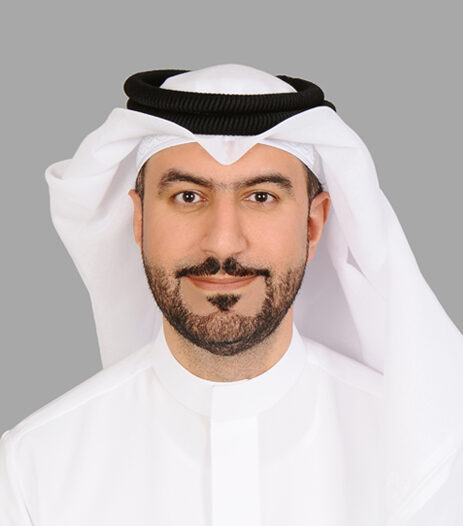
Head of Trade Product at National Bank of Bahrain
Q: How do you see the trade finance landscape evolving over the next 3–5 years in general?
The trade finance landscape is rapidly evolving toward full digitisation. Many current processes remain paper-based, but we’re seeing a shift driven by AI and digital documentation. Additionally, sustainability-linked financing is gaining traction, aligning trade flows with ESG goals. As SMEs are vital to national economies, their inclusion will expand through digital platforms and fintech partnerships.
Q: What major trends (e.g. digitization, ESG, geopolitical shifts) are shaping NBB strategic priorities? And how does NBB stay competitive in this sector?
NBB’s strategic priorities are shaped by several key trends:
- Customer Centricity:We aim to enhance customer experience by streamlining transactions, eliminating unnecessary layers and ensuring processes are faster, more transparent, and inclusive of businesses of all sizes.
- Digital Transformation:We have advanced our digital agenda through platforms such as DigiCorp, DigiConnect, and eLMS for corporates, and SoftPOS (NBB Go) for merchants. These solutions streamline workflows, boost onboarding efficiency, and enable more inclusive participation in trade finance.
- ESG Integration:We embed ESG principles across the organisation through initiatives including our Sustainability Academy, stakeholder materiality assessments, and a senior-level Sustainability Management Committee.
Our Sustainable Finance Framework, developed with Standard Chartered, aligns with the Kingdom’s net-zero ambitions and with global standards such as ICMA and LMA’s green and social instruments. We also provide sustainability-linked financing, clean energy lending, and advisory services to support our clients in adopting sustainable practices.
This holistic approach has earned the Bank recognition as Best Bank for ESG, Best Bank for Corporate Responsibility, and Best Bank in Bahrain at Euromoney’s 2025 Awards.
We remain competitive by offering seamless trade solutions, expert advisory services, and leveraging our presence in the KSA and UAE markets.
Q: What are the biggest compliance challenges in trade finance today?
Trade finance is increasingly impacted by evolving global sanctions and export control regimes. Frequent updates to global sanctions lists require agile and responsive screening systems. Moreover, as digitisation accelerates, maintaining accurate and auditable records becomes more complex.
Q: How do you manage risks related to financial crime, including sanctions and money laundering, in cross-border transactions? and how does your team balance risk controls with client convenience?
We manage financial crime risks through a multi-layered compliance framework that includes:
- Optimised client onboarding processes that maintain strict compliance standards while ensuring accessibility and efficiency.
- Robust due diligence protocols applied consistently across the entire trade transaction lifecycle to identify and mitigate potential risks.
- Specialised tools used to monitor vessel activity, authenticate transport documentation, and detect the presence of dual-use goods.
To strike the right balance between risk mitigation and client convenience, we prioritise transparency, set clear expectations, and align internal service-level agreements (SLAs) to support seamless execution.
Q: What changes have you implemented considering evolving regulatory expectations?
In response to evolving regulatory expectations, NBB has:
- Enhanced its reporting frameworks to meet new ESG disclosure requirements.
- Established a Sustainability Working Group (SWG) for governance and oversight.
- Implemented advanced screening technologies to enhance automation, improve accuracy, and minimise manual intervention in compliance processes.
Q: What is the latest technology NBB introduced when it comes to trade finance and delivery service?
NBB’s latest innovation is its fully digital Supply Chain Finance (SCF) solution, integrated with DigiCorp. The feature automates buyer and supplier interactions, provides invoice-backed early payment to suppliers (including those without an NBB account), optimizes buyer cash flow, and shortens transaction cycles. It also offers detailed reporting and analytics, enhancing transparency and control for all parties involved.
This is part of a broader trade and transaction banking suite that streamlines operations, supports cash management and liquidity optimisation, and delivers speed, accuracy, and visibility across the entire trade process.
Q: What has been the customer adoption to NBB’s latest technology / products offering?
Customer adoption has been strong, particularly among corporate clients who value operational agility and liquidity optimisation. NBB’s DigiCorp has gained traction for its user-friendly interface, enabling payments, report downloads, and comprehensive cash management tools.
Q: How do you at NBB assess the potential of AI, or IoT in trade finance product offering and back office?
AI holds a significant promise for trade finance at NBB. It can streamline document verification for letters of credit, enhance AML checks, and support predictive risk modeling. IoT also offers potential for real-time goods tracking, improving supply chain visibility and financing accuracy.
Q: What do corporate clients expect from trade finance services today?
Today’s corporate clients expect:
- Competitive pricing
- Seamless digital interfaces
- Speed and transparency in transactions
Q: How do you develop talent and maintain high performance across diverse markets?
We develop talent and maintain high performance through:
- Continuous learning and development programs
- Support for professional trade finance qualifications
- Performance frameworks that reward collaboration and client impact
- Internal mobility to create opportunities for local talent
Q: What’s the most valuable lesson you’ve learned in your trade finance career?
The most valuable lesson I’ve learned is the importance of adaptability. With over 22 years in trade finance, I’ve witnessed constant change. Understanding client needs and delivering tailored solutions has been key and resilience is what drives long-term value.
Q: If you could advise your younger self stepping into this field, what would you say?
My advice to my younger self would be learn trade mechanics and concepts through hands-on experience, pursue LIBF professional qualifications, and always stay innovative.
Q: What keeps you motivated in this complex and constantly evolving environment?
What keeps me motivated is the tangible impact we make by empowering businesses and contributing to economic growth in Bahrain and the region. The dynamic nature of trade finance and its constant evolution make it an exciting and rewarding field.