
 The possibility of global recession and falling demand are two of the big issues for treasurers to wrestle with in the coming year. LIZ SALECKA gets their views on what the New Year has in store
As the New Year begins, corporate treasurers across the Middle East are preparing for a busy time ahead by ensuring that their companies have adequate access to funding, as well as appropriate cash management and hedging strategies in place.
Increasingly, global issues, such as Europe’s sovereign debt situation and the possibility of worldwide economic downturn, are adding to their concerns – despite not having had a significant impact on regional economies so far.
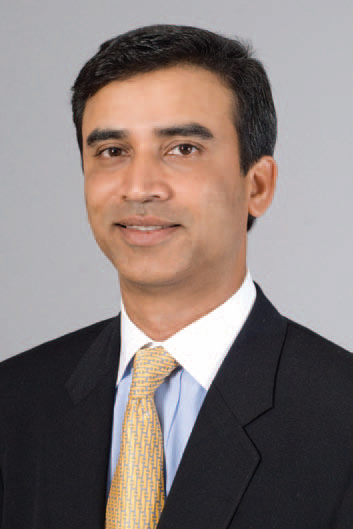
“Generally, neither corporates nor banks in the MENA region are exposed to Europe so the eurozone situation has had little impact,” says Asif Raza, managing director, head of treasury and securities services MENA, JP Morgan, who notes that the region is still experiencing positive GDP growth, particularly in GCC countries, which is enabling high levels of investment.
However, he also points out: “Should there be a major global economic downturn, this could impact the price of oil and this in turn would have consequences on the level of government spending, thereby affecting the growth of the region.”
Rob Farrow, treasurer of Alghanim Industries, also believes that external pressures could impact the price of oil.

- Rob Farrow, treasurer of Alghanim Industries
“The eurozone crisis could have an affect here – mainly if it drives down the oil price,” he says. “There are two schools of thought. One is that if demand from China and other emerging market economies continues at the current pace, then this will keep the oil price where it is. The other is that if there is a meltdown as a result of the eurozone crisis, and demand falls overall, then this will reduce the price of oil. This could impact budgets and spending in the GCC region, but probably not this year.”
One of the biggest concerns today is clearly whether Middle Eastern governments can maintain their current levels of spending during 2012.
In response to the recent political unrest, many of the region’s governments – particularly in GCC countries – have put social programmes in place, and this has added to the pressures on their budgets. Many of the richer countries have also committed financial help to those countries affected by the Arab Spring. For example, they have committed $10bn of investment to Bahrain alone.
“These markets have not been affected as much by the Arab Spring because governments have kept spending money on infrastructure projects and have been offering direct grants and salary increases to their local populations,” says Farrow. “The question is whether they will continue to do this. The uncertainty faced here is different to that faced globally and in Western markets.”
Access to funding
While the sovereign debt crisis in the eurozone has had adverse implications for European banks, the Middle East’s banking sector has remained relatively immune to any liquidity issues.
“There is certainly enough liquidity in the region, and this is not an issue. However banks do need to maintain loan-to-deposit ratios, and single obligor lending limits, which stipulate how much of their balance sheets they can lend to a single customer,” says Raza.
“As a result, certain banks may face a situation where they want to lend to growing businesses but are restricted by the limits or loan-to-deposit ratios. Additional capacity needs to come from regional banks and foreign banks.
“When it comes to accessing funding, this region is somewhat insulated from other parts of the world, and there appears to be ample liquidity in local markets. Some international banks do come and go, but major regional players (for example, HSBC and Standard Chartered Bank) have stuck around, supported regional businesses and built strong relationships here,” adds Farrow.
“Whilst name lending hasn’t disappeared, greater transparency with lenders clearly pays off in terms of the depth of relationship and access to quality funding – it’s a two-way street”
Despite this, many Middle Eastern corporate treasurers are aware of the need to put measures in place to ensure adequate access to funding in 2012.
“Global issues such as the economic downturn, eurozone crisis and US deficit have the potential to affect our ability to source funding in support of our growth, although to date we have not experienced any serious difficulties in this respect,” said a spokesman for the treasury department at the Emirates Group. “We have always found the best mitigant (to funding issues) to be the wide diversification of both counterparties and products.”
Meanwhile, Raza believes that companies, that anticipate having large borrowing requirements in 2012 should seek to diversify their funding sources.
“Historically, Middle Eastern companies have relied on short-term borrowing, and things would have to be going drastically bad for them not to be able to access such facilities. Going forward, however, I would recommend that treasurers seek to ensure that they have bi-lateral facilities in place with their banks as well as credit facilities. They should also look around for structured financing solutions, which can provide them with longer-dated funding on favourable economic terms.
“As of yet, the concept of committed facilities is not that well established in the region, but this does represent a good way for companies to lock into a facility that they can draw on when they need to. Another solution for those corporates that know they are going to have big financing needs in the year ahead is to consider arranging syndicated facilities.”
He adds: “We have also seen long-term financing for large capex imports by using Export Credit Agencies guarantees. This is a trend we anticipate to continue.”
Cash management is crucial
Meanwhile, at RBS, Sherie Morais, head of global transaction services, Middle East, believes corporates will need a clear cash management strategy in place in 2012 to optimise their cash positions, and unlock liquidity in their supply chains.
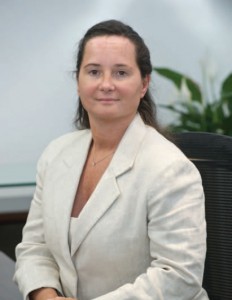
- Sherie Morais, head of global transaction services, Middle East, RBS

“Cashflow disruptions and potential balance sheet risks will be the last thing a corporate treasurer wants in the current economic environment,” she says.
“With this region emerging as a major trade hub for Asia, Africa and Europe, increasingly trade enabling finance solutions will be an integral part of liquidity management.
“Corporate treasurers are looking for ways to unlock liquidity in the supply chain – any disruption within this could prove costly,” she says.
Both RBS and JP Morgan are confident that supply chain finance (SCF) will now become a fast-growth market in the Middle East.
“We have definitely arranged more SCF deals over the last six months than we did in the previous 18 months for both large corporates and multinationals, which are looking to provide better and cheaper access to finance for their counterparties, based on their own (the large corporates’) credit ratings,” says Raza.
However, Farrow believes that this type of financing is still in its infancy. “Many large banks are pushing trade finance because it can help them remove the weight on their balance sheets. Trade finance solutions do have a role to play, but I do not believe that they are as important as some banks would want us to believe,” he says.
“This part of the world is also the home of Islamic banking, which is largely trade-driven and provides solid liquidity – it’s a key growth area.”
Hedging is vital, too
Given the current high levels of spending taking place in GCC countries at present, there are also inflationary pressures in the region, which could result in early moves to increase interest rates.
This represents another possible outcome that treasurers need to guard against today, according to Farrow.
“Treasurers are recognising that it is a good idea to have some form of interest rate protection in place. This is unlikely to prove an immediate issue in the West, but it could become an issue here,” he says, pointing out that inflation has breached five per cent in Kuwait.
Looking into the future, Middle Eastern corporates are relying on their banking partners to support them with access to funding and other traditional services, without necessarily adding lots of new bells and whistles.
“We expect our relationship banks to take a long-term view on risk and return – and to provide support on both sides of the balance sheet,” said a treasury spokesman for Emirates Group.
And Farrow adds, “I don’t believe there is that much new that the banks can offer us now – but the old adage of building strong relationships still stands firm.
“When it comes to Arab Spring-related issues, companies have to take a strategic view on what they should do and decide on the amount of business they can do in more risky markets. Aside from usual core advice on transactional banking, banks cannot help them here.”
He, nevertheless, notes that corporates’ confidence has been slightly thwarted by uncertainties surrounding Basel III.
“There is a lack of clarity on Basel III, the impact it will have and the associated costs,” he says.
“There is a big communication task ahead for the banks in explaining Basel III to corporates and their treasurers – and how it will affect both the availability of funding and pricing.”
1 Comment
Look out: here comes the future http://t.co/QUGdoeB5 @JPMORGANTS @RBSBANKING @RBS_EF_Rome #KUWAIT #TREASURERS @CitiGTS @TalkGTB
Look out: here comes the future http://t.co/QUGdoeB5 @JPMORGANTS @RBSBANKING @RBS_EF_Rome #KUWAIT #TREASURERS @CitiGTS @TalkGTB