
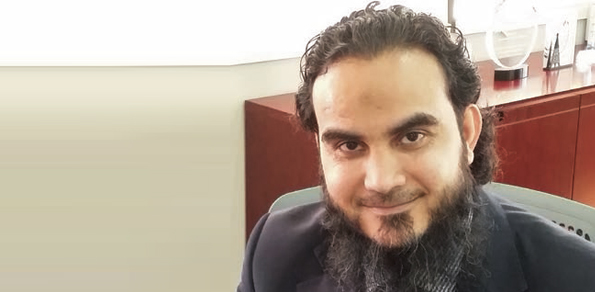

In an unpredictable economic climate it is vital that treasury teams are prepared for every eventuality. PAUL MELLY reveals how that is certainly the case with Saudi Telecom
Even seven years after the 2007/8 financial crisis, the effects can still be felt, says Saudi Telecom’s Noman Ansari. The markets are unsettled and it seems that every day brings new developments; the economic climate is unpredictable.
So it is a demanding environment. Therefore, a group such as Saudi Telecom Company (STC) – one of the Middle East’s leaders in a fast-changing industry – has no choice other than to adapt and develop the tools to contain risk and support the growth of its business.
Ansari, as group treasurer and head of corporate finance, is at the heart of the team that devises and operates this strategy. But the global context is tough and uncertain, as he explains.
“Commodity and oil prices are seeing historic lows. Interest rate expectations are frequently being recalibrated; currencies have been very volatile – the Swiss central bank recently shocked the market by removing its peg to the euro. The European Central Bank has launched a quantitative easing package worth more than €1 trillion.”
With so much happening, he says market opinion is significantly divided and many previously held views have proved to be wrong.
“The prime challenge for all financial management and treasury teams remains to understand the market well, identify and accurately calculate their exposure – and then deploy optimal strategies to manage that exposure. In these conditions, liquidity and cash management, to manage risk and enhance returns, is also critical.” And it is not just the economic environment that poses questions. The telecoms sector itself faces big challenges, Ansari points out.
The conventional telecom business model – driven by voice calls – is more or less saturated globally. There are opportunities for expansion but these depend heavily upon the growth of data usage and new forms of connectivity, whether these are in the consumer data business, cloud computing, e-commerce or other information and computer technology initiatives.
So telecom companies have to invest in the high quality infrastructure required for handling this data and connectivity business. This global trend, of course, applies in Saudi Arabia, too.
“The growth in economic activities and the government’s initiatives for e-commerce, e-government and other mega projects such as new economic and industrial cities that we see in Saudi Arabia provide the ‘boost factor’ and act as an accelerator for the telecom sector,” says Ansari.
STC’s approach
As one of the Kingdom’s major companies, within its finance organisation STC has a substantial treasury division, which works closely with the group’s board and board-related committees.
Ansari explains that treasury is sub-divided into three departments – for capital management and derivatives, for cash management, and for risk management and insurance. And because of the size of operations and the potential risk exposure, the treasury also has its own internal quality and compliance unit.
“This unit is involved in all treasury dealings from conception to execution to monitoring. It operates proactively and is fully integrated into treasury activities, with a very strong mandate to ensure compliance, quality and risk supervision. It coordinates with the organisation-wide audit, compliance and quality assurance teams.”
Recent international exchange rate shifts have highlighted the importance of managing currency risk.
Ansari says that the main currencies that STC deals in are the Saudi riyal and the US dollar – which are pegged to each other, so the group’s exposure is naturally managed, and low.
However, he adds, “We do have exposure to other currencies – mainly the euro and the Chinese yuan – for equipment imports, and indirectly to certain other currencies through our investment interests in companies that are based and operating in different countries.
“This direct and indirect exposure to different currencies is important for the business and is actively managed on an optimal basis by developing and implementing effective hedging solutions.”
The treasury operation also supports STC’s investment and capital spending – and here a number of issues come into play.
“The foremost challenge for treasury with respect to funding capital investment is to understand the debt capacity of the business and to prioritise the most optimal source of funding – ie: bank loans, capital markets and supplier credit,” says Ansari.
He adds that in order to maintain STC’s credit rating and comply with financial covenants under existing facilities, the treasury division must also keep a careful eye on how its funding affects its debt capacity and debt-to-equity ratios.
“Choices about different sources of funding are made after taking into account many considerations such as commercial terms, cost and benefits analysis, legal structure, covenants and the sharia perspective – as we ensure that all our activities are sharia compliant.
“Since the financial crisis, another very vital consideration has been to ensure adequate diversification among the different sources of funding available.”
History has shown that during times of financial crisis and high market volatility, it can be unwise to rely on a single funding source – which can leave a company exposed to the risk of a disruption to the flow of money or a change in the terms on which it is provided.
Technological change
Today, of course, technology plays a crucial role in financial management and this can present awkward questions; for example, some companies are wary of cloud-based services.
However, STC is comfortable with the new environment, because the group is itself in the information and communications technology sector, developing cloud services for the Saudi market in collaboration with international partners.
“We are using in-house developed and offered services and facilities, which are regularly monitored and improved,” says Ansari. Moreover, investment in new systems is a constant priority.
“We strongly believe that with the integration of global financial markets, and for the synchronisation of the colossal amounts of data required for thorough analysis, sophisticated technology tools from the likes of Bloomberg and Reuters have become a vital necessity. We continuously invest in our technology to keep it up to date.
“One of our recent initiatives is to co-ordinate with banks – directly through Bloomberg terminals – for the request of deposit rate quotes for cash investments. This measure not only helped in attaining the best rates but also reduced the turnaround time significantly.
“Having said that, we have Oracle as an ERP (enterprise resource planning) solution and we are focused on utilising and benefiting from all its treasury features.”
Meanwhile, he adds, “We are actively liaising with our Bloomberg services provider to set up a comprehensive customised desktop monitor for our exposure and investment interests.
“In addition to this, we are keenly exploring opportunities with credit rating agencies for adopting a more interactive approach in simulating rating profiles for different possible strategies and scenarios.”
Banking options
Saudi Arabia is one of the largest economies in the Middle East, but there are only a limited number of foreign banks operating in the Kingdom. So STC works with both local and international players to get the support and services it needs.
“Although the Saudi banking market is significant in size and depth, we feel, the overall approach is still not very dynamic and robust. While being very strong on liquidity and with respect to plain vanilla products, local banks at times lack both capabilities and appetite to offer structured and more complex financial products on their own,” says Ansari.
“For derivatives, hedging solutions, and structured cash investment products, we generally approach international banks. These have a strong products base and the capabilities to satisfy our requirements. But there appear to be certain areas where improvement is needed, particularly with regard to the lack of an appropriate physical presence in the Saudi market and in relation to their sharia compliant service capabilities.
“So we deal with and maintain close relationships with a range of local, regional and international banks. This helps us to diversify our relationship exposure and allows us to match specific requirements with the best available expertise in the market.”
STC looks at a number of criteria in deciding whether to use a particular bank – or cease working with another.
“Foremost in the criteria list are the bank’s credit rating, market standing and size, its capability to offer customised solutions, understand sharia and capacity to structure compliant products, and the history of our relationship with the bank – especially in times of crisis – and its flexibility in approach and overall responsiveness.”
Meanwhile, in-house, getting the right staff is key: “With the ever-evolving complexity of financial markets and legal systems, hiring and retaining the right talent for the job is becoming a challenge.” n