


venue for this
year’s Sibos event
Cash management and transaction banking will go under the microscope at this year’s Sibos and, says PAUL MELLY, this may leave some MENA banks questioning their operations
Few industries have been so impacted by the advent of online technology as cash management and transaction banking – and the pace of change shows little sign of slacking off.
This year’s Sibos global financial services conference, in Singapore in October, will provide a chance to take stock and consider what the past few years of almost frenetic development might mean for the way that banks operate in future: how they manage risks, the coming shape of their products and whether smaller institutions will be able to meet the technological and prudential standards driven steadily upwards by the big global banks and tough-minded regulators.
For banks based in the Gulf, these are key questions. The region’s major businesses are starting to expect sharper service and more innovatory financial products, driven if necessary by more vigorous competition from the foreign institutions deepening their footprint in the GCC economies.
In Cash & Trade’s regular corporate interviews, hopes for livelier service and more fresh thinking from local banks are a near constant refrain in the comments of senior financial executives at big Gulf companies.
Almost every treasurer, CFO or general manager questioned in the interview series has signalled a wish for Gulf banks to show greater risk appetite and innovate more in the services they provide.
So the challenge from customers is there. How will banks respond ?
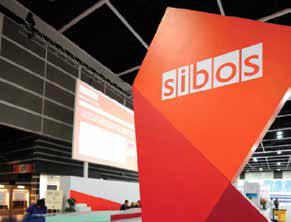 Sibos provides a chance for GCC bankers to exchange ideas and experience with their counterparts from other parts of the world, and thus explore ways in which they could further develop their technology and their financial products.
The agenda for this year’s conference shows that the banking sector globally is well aware of the pressure from customers for faster and more reliable service.
The Singapore gathering will provide a chance for the industry to discuss how to meet rising expectations while still ensuring that essential security and risk controls are maintained.
Payment advances
The paradox of potential opportunity and risk combined is particularly acute when it comes to electronic transaction banking.
The industry is moving towards a situation where instant payments on a “24/7/365” basis are the norm; saving time also saves money.
But a Sibos seminar will debate whether there might be limits to this trend – if the speed of transactions reaches a point where this also brings a significant increase in compliance or safety risks.
So can banking marry what is technologically feasible with a sensible level of safeguards for the health of the financial system? The 2008 global financial crisis showed how over-elaborate “clever” techniques could, in fact, create new risks, with devastating consequences.
How will medium-sized banks – such as most of those based in Gulf countries – adjust to the twin demands for faster service, but also stronger security?
Will they have the resources to invest in the necessary technology and adequate numbers of specialist staff? And will they have the self-confidence to take risks and develop faster systems where they sensibly can, yet resist customer pressures to go further than would be prudent?
In the aftermath of the global crash, there were a few major institutions based in GCC countries that ran into serious difficulty. Today’s economic context is less dramatic but still testing, after a slump in oil prices last year and amidst fresh signs of slowdown in China, a key market for Gulf oil.
So this is certainly not the easiest operating environment for Middle Eastern banks, which feel the need to respond to demands from impatient customers seeking faster payments and a bigger appetite for risk. And, in any case, regulators may actually toughen up prudential rules.
This could create fertile ground for new players to enter the payments market. Already a growing number of financial technology companies are moving into the field; and Sibos is expected to see more discussion of the impact this could make, particularly as the new arrivals move on from an initial focus on low-value, person-to-person payments to start offering alternative payments systems for bigger transactions and potentially competing against traditional correspondent banking.
If banks are not to lose their predominant role in international transactions, will they have to fundamentally re-think the correspondent banking model? How can they maintain their role as the providers of a secure and reliable payments channel while also responding to customer demands for quicker and more innovatory service ?
Trade payments could be a particularly important area of activity for banks in the GCC, given the region’s heavy reliance on imported consumer goods, food and capital equipment. Gulf economies are heavily oriented towards international trade.
The evolving pattern of global trade flows, and the way that banks can adapt their services to cater for this, will be another subject on the SIBOS menu.
Digital trade products are increasingly used by companies to support their core sales and distribution processes and improve efficiency and cost savings; increasingly, e-invoicing, purchase-to-payments, e-commerce hubs and trade documentation hubs are routine tools. And, of course, SWIFT, the international interbank payments system, has itself begun to adapt, notably in supporting the development of enhanced bank treasury operations.
How will Middle Eastern banks adapt and cater for this changing world? Do they have the necessary resources – or might they need to develop new partnerships, to achieve the economies of scale and the GCC regional coverage required to meet customer needs ?
One Sibos session will look at the industries that are now turning most often to digital trade solutions and the approaches taken by those banks that have gone furthest in catering for this new demand.
Meanwhile, transaction banking for the consumer market is also set to be a key area of development over coming years, and, particularly, in affluent economies such as those of the GCC, where so many people are already heavy users of online services.
The Singapore conference will give Gulf bankers a chance to exchange thoughts with European counterparts, who are also operating in a similarly “wired” consumer finance and payment landscape.
Bankers are certain to face enhanced competition from third party payment service firms. But the anonymity offered by such services does present additional risks of frauds, such as “phishing” – where fake emails purport to come from legitimate banks – or even money laundering and terrorist finance, thus complicating the task facing regulators.
So compliance will also be a critical part of the agenda. Singapore will give GCC participants a chance to explore ways of reinforcing the internal controls that they will need to underpin the development of faster and more flexible transaction banking services.
Online services in GCC to triple by 2020
Digital online technology is set to make a huge impact on the future development of banking in the Gulf – and one that has implications for regulators, too.
Forecasting growth trends is an inevitably uncertain art, but there seems no doubt that online services will account for a steadily expanding share of bank operations over the next five years at least, because they offer speed and convenience for customers and cost savings for the banks.
There is certainly scope to grow.
A study by the consulting firm AT Kearney estimated that only a third
of banking customers in the GCC were signed up for online services – and only half of those were regularly
using them.
However, analysis of the age profile of online banking clients showed that the majority of online customers were in the 21-40 age group – generally in work but often with significant personal commitments, such as young children. As this age cohort grows older, the use of online banking is projected to increase, says the study.
Corporate customers’ use of online banking for routine trade payment and treasury activities also seems likely to grow substantially.
Overall, Doha Bank chief executive
R Seetharaman has estimated that by 2020 online banking services are set to triple in volume in the GCC, while online banking service sales could increase fivefold.
The growth, of course, is good news but it does present regulatory challenges for bank supervisory authorities across the GCC region – and for bank management in growing their business, while remaining fully compliant with all the rules and prudential benchmarks.
For example, increased use of online services will enable banks to cut back on the use of traditional branches. But that will make it harder for banks to fulfill official requirements regarding Know Your Customer (KYC) – which is particularly important in regulating payments and transfers to ensure these are all fully legitimate.
Online technology will also make it easier for banks to cater for customers outside their home countries, or to expand their services into other GCC markets without going to the expense
of setting up full branch networks.
But bank regulators will want to be sure that in the rush to expand their business, banks do not relax standards for scrutiny of customer identity or the thoroughness of their analysis of credit risks.
Moreover, the regulatory challenges will be as technical as they are prudential – the sheer volume and speed of electronic transactions poses real tests in terms of oversight and risk management.