
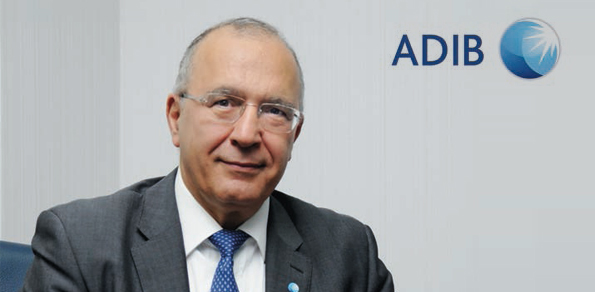

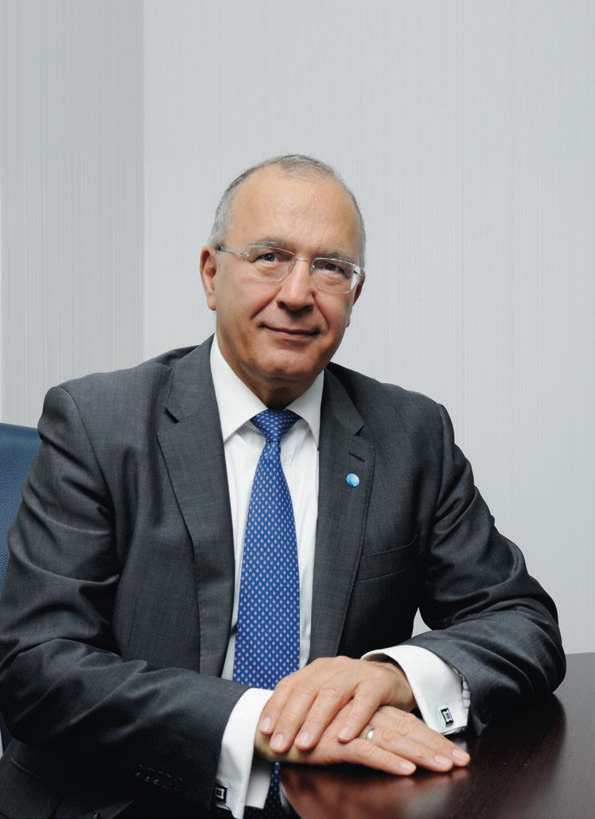
Managing both cash management and trade finance as a seamlessly integrated transaction banking proposition is one of the secrets of ADIB’s success, Maki Vekinis, the bank’s head of global transaction services, tells Cash&Trade in an exclusive interview
Would you elaborate on ADIB’s overall GTS strategy and explain the importance of ADIB’s cash and trade business, both locally and internationally.
global transaction services
At ADIB, we manage both cash management and trade finance as a seamlessly integrated transaction banking proposition. This has had a very positive response from all of our corporate customers, from the smallest business to the largest conglomerate, and we have found that what our corporate customers want is a credible and consistent provider of cash and trade products, services and most importantly, advice on how to become more efficient and improve performance.
We have implemented an operating model that allowed us to provide a completely integrated solution platform that can satisfy the needs of all our target customers for any type of cash or trade transactions.
How do you view the UAE market for cash and trade requirements?
The market has, until recently been dominated by the global banks, which have been able to mobilise significant resources to capture the top end of the cash and trade business; yet we are seeing a penetration from local banks, as reflected in the UAE Central Bank report that shows local banks have grown their share of the trade finance market to between 65 and 70 per cent from less than 50 per cent a few years ago.
Considering the [average] wallet size of the trade at more than AED two billion in fees, that is a big swing towards local banks. At the same time, banks have been innovative in their approach to cash management, resulting in an increasing number of big name companies using local banks.
ADIB has seen the benefits of the shift in focus to local banks and has been bringing out forward-looking solutions that satisfy the current and future market needs.
Re-the above, what are the recent trends and what challenges do you foresee in the future?
The trend is definitely for local banks to offer solutions while the challenge is to anticipate the need for increasing reliance on secure and reliable digital offerings.
How is ADIB addressing such challenges as there may be and helping its customers in this respect?
ADIB has embarked on a multi-discipline strategy. A big part of that is research and development in transaction banking, looking at the way future CFOs are entering the market and listening to think tanks and industry participants at conferences on what the next trends are on the horizon.
ADIB’s innovative solutions utilise technology to provide holistic solutions that cater to customers’ import and export finance needs, regardless of whether the trade is being handled under LCs, collections or open account.

Financial regulations are on the increase…so how is ADIB meeting those requirements?
We have been involved in numerous discussions with our regulators and we have multiple check-points across the lifecycle to assess the impact of any regulation. Being complaint with regulations is part of our offering, our commitment and brand values.
The good news is that the Basel Committee on Banking Supervision has agreed to consider trade finance offered by banks as a low-risk-making capital requirement. This will continue to sustain growth and job creation in the world as well as supporting our commitment to our clients to continue providing trade finance services at a reasonable cost and help them in developing their businesses.
Are there any new Islamic trade products that ADIB is introducing to the market?
We know that trade finance is improved and becomes more efficient, for both the customer and the bank if it is offered and operated under Islamic finance principles. After all, Islamic finance is based on trade of goods and risk participation – the cornerstone of what we offer.
Specifically in ADIB we have a very strong team of specialists, who work to address the real business needs that our customers who are involved in imports or exports face.
For example, we have recently introduced numerous products that facilitate exporters’ needs for working capital. We have also increased our participation in the value chain when customers import or export thereby releasing working capital to compress their business cycle. Being an Islamic bank, we are closer to the customer’s underlying trade. Shari’a principles complement risk management objectives by giving the utmost importance to ensuring the genuineness of the trade that is being financed by the bank.
In the coming year or two which areas do you think ADIB will be most focused on for UAE corporate treasury?
This is the area of focus where we want to make our mark in this market. We believe the role of the bank is to execute the transactions efficiently and as expected. Corporate treasuries in the GCC will continue to rely on the fixed peg to the US$ but the increasing importance of Chinese and other Asia exporters to issue invoices in their currency to mitigate the currency risk is a great opportunity.
The big banks are already working to tap this operating model and ADIB has made the arrangements, built the network and is able to work with corporate treasuries irrespective of their area of focus, covering all regions, especially Africa and Asia. Our treasury works hand-in-hand with our team to satisfy customer needs for currency.
On your website you make the point that ADIB offers a complete range of trade financing solutions. What in particular makes clients turn to you?
We welcome any type of customer looking for a bank that helps their business and adds value to their import/export department efficiency, cost management and reliability.
ADIB’s philosophy is to understand, discuss and propose a solution that enhances what customers currently do and implement it with agreed KPIs so our planned reviews maintain and improve performance over time. n