
Corporates and banks in the Middle East face a variety of challenges when it comes to both cash management and trade fi nance. Here, Asif Raza, Vivek Anand, Farrukh Siddiqui and Ali Moosa explain to LIZ SALECKA how J.P. Morgan is helping its corporate and fi nancial institution clients to overcome these challenges and detail some of the bank’s latest initiatives, including the launch of a full trade services capability at its new branch in Riyadh
Can you describe the extent of J.P. Morgan’s activities in the Middle East and what your strategy is for the future?

Asif: J.P. Morgan has been doing business in the Middle East for more than 75 years and, throughout this time, we have continually invested in the region to support our clients’ needs. In recent years, our investment has signifi cantly increased, following detailed discussions with many of our clients – both locally and internationally – and aft er gaining a greater understanding of their own future strategies and requirements in the region.
Over the past two years, we have opened branches in countries where our clients want us to be. In February this year, we set up a presence in Qatar while last year we opened an office in Abu Dhabi. We have also opened a branch in riyadh. These additions complement our strong franchise across the region, which covers other key centres, including dubai, Manama, Cairo and Beirut.
however, expanding our local presence in the region is only part of our strategy. We are also continually looking to improve and expand our capabilities in the region to service our existing and prospective clients. Many of our Multi-national Corporation (MNC) clients have expressed a strong desire to work with us all the more and want us to help them execute their own expansion plans.
securities services is one of the fastest growing businesses for us in the region and, like our cash and trade business, we are investing equally in it to meet the growing needs of the market.
Ali: Our FI franchise is very strong in the region and our local banking clients are looking to expand their offerings in areas such as trade finance and cash management. One of our strengths is that we can leverage the great relationships we have with our local banking clients and partner with them to help them grow regionally or internationally. We work closely with our local banking partners to offer our corporate clients a “best in class” service if we are unable to meet their specific local requirements ourselves.

J.P. Morgan also off ers depositary receipts services to companies looking to cross-list their shares in foreign markets in order to access a wider pool of capital and diversify their shareholder base.
Both our corporate and FI client bases take advantage of J.P. Morgan’s global reach, which spans more then 60 countries worldwide.
Is it now much easier for MNCs to operate in Middle Eastern markets?
Vivek: I would say that yes it is. The introduction of certain regulations a few years ago improved transparency within the region, and streamlined other processes, such as the management of commercial disputes. This has made it much easier for MNCs to operate here. Th e introduction of a credit information system means that an efficient credit process is now in place, which gives MNCs greater security.
Like other regions around the world, all import and export trade business in the region is conducted in Us dollars, and this has obvious benefi ts for Western and eastern MNCs alike. as one of the largest US dollar clearers in the region, J.P. Morgan is well placed to serve the trade fi nance needs of all business segments and our clients can take advantage of our expertise in Us dollar cash management.
Dealing internationally always presents a number of challenges to cash and liquidity management. What challenges in particular do treasury managers in the region now face?
Asif: In this space, corporates operating internationally face two main challenges – accessing information and managing their working capital as efficiently as possible.
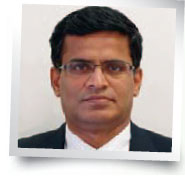
The risks corporates face in overseas markets range from geo-political risks to legal and operational risks, and these all affect their cash management, making access to up-to-date management information crucial. FX and interest rate risk have been cited many times by treasurers as their key concerns.
While economies around the world are still fi ghting to recover from the downturn, the markets remain volatile, which makes having a robust treasury operation even more critical. The centralisation of liquidity management and the streamlining of payment and collection processes are vital to helping treasurers unlock more working capital. Our clients operating internationally see the benefi ts of working with a global partner like J.P. Morgan, which can bring them the reach, effi ciency and expertise they need to operate around the world.
When it comes to international M&A activity and dealing with cross-border counterparties, how can J.P. Morgan help corporates manage risks?
Vivek: If we take a look at M&A activity in particular, escrow account services are frequently used to mitigate risks between counterparties. J.P. Morgan has recently extended its escrow capabilities into saudi arabia, and clients can rely on the expertise of our escrow team when navigating through the local regulatory landscape, and the Know Your Customer process. One of the team’s greatest strengths is the ability to react quickly to clients’ requirements, and it is not uncommon for us to have an escrow account opened and fully operational within 48 hours.
Clients use our escrow account services to ensure that commitments made between them and one or more parties are met. J.P. Morgan achieves this by acting as an independent third party, which holds and disburses funds until both parties are satisfi ed that deliverables due are transferred as promised.
Our escrow services can also provide an effective means of third party asset safekeeping and can serve as a controlled disbursement solution that mitigates risks in, not only M&a activity, but also in good-faith deposits, subscriptions and in the case of litigation or arbitration actions.
Farrukh: For corporates involved in cross-border trade, there has been a renewed focus on the credit quality of their counterparties. although a lot of trade is now conducted on an open-account basis, we have seen a movement back towards greater use of letters of credit, guarantees and other risk mitigation instruments in the Middle East.
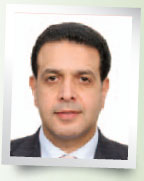
We provide support to all our clients – both corporates and banks – by providing a range of trade finance solutions that incorporate these instruments so that they can obtain the level of risk mitigation needed. For corporates that operate across borders, it is also vital that the risk management strategies they put in place are arranged with a fi nancial institution that has global reach like J.P. Morgan.
Was the Middle East as adversely affected by the financial crisis and economic downturn as other parts of the world, and how did it overcome any issues related to the availability of credit?
Farrukh: Banks globally readdressed the way in which they allocate and price credit. although local banks here were not as badly aff ected as some Western banks due to the region’s oil industry, the knockon eff ects were certainly seen in countries such as the UAE as foreign investment started to reduce. This, in turn affected cashflows for local banks and corporates alike. There were not that many institutions in the region that did not feel the eff ects of the crisis.
The fact that traditional instruments made a comeback really helped the provision of trade finance. Many banks did clamp down on the provision of long-term financing, but there was a shift towards the provision of trade finance. This really boosted prospects for those banks that were already off ering trade finance in the region, and J.P. Morgan, with its regional history and strong balance sheet, was ideally placed to support both clients and partners alike.
During the crisis, J.P. Morgan emerged as one of the very few global banks to continue making a profi t in every quarter. as we have established relationships with FIs in the Middle East we were in a position to discuss the situation with them and off er help by partnering with them to facilitate the provision of trade fi nance. We also got engaged in constant dialogue with local banks during which we shared our knowledge, and gained a better understanding of their needs. This in turn enabled us to provide tailored solutions.
J.P. Morgan recently launched a full trade capability at its Saudi Arabian branch. Can you give details of this?
Farrukh: Trade services have been a key aspect of this launch at our riyadh branch because we want to meet the trade finance needs of our Saudi Arabian client base, which includes local companies looking to trade internationally, MNCs doing business in saudi arabia and local FIs.
This suite of trade products refl ects our international trade fi nance capabilities and includes guarantees and letters of credit as well as a range of structured import and export fi nance trade products, including trade loans and supply Chain Finance. Th is means that we will be able to provide access to these products and services, via our team of trade finance professionals in riyadh, to clients in saudi arabia on a face-to-face basis.
Th ese trade services complement the range of treasury, money market and foreign exchange products launched by J.P. Morgan’s riyadh branch earlier this year.
What can treasurers expect next and when will this happen?
Ali: Our Treasury Centre in Saudi Arabia is there to assist treasurers and as we implement a complete management structure in the coming months, we will introduce a demand deposit account (DDA) platform, allowing accounts to be opened in multiple currencies, as well as payment and collection services for the domestic saudi arabian market.
Aside from your growing portfolio of cash and trade finance services, how is J.P. Morgan looking to service the market for Shariah-compliant investments?
Asif: at the moment, the proportion of financial assets that are shariah-compliant is still relatively low in general in the Middle East but this market is really starting to develop and grow, and we are seeing more and more shariah-compliant investment funds become available.
J.P. Morgan has a comprehensive off ering to support shariah-compliant investment funds, which is available globally, and this encompasses investment fund expertise, fund accounting, custody services and compliance services.
FIs and corporates alike regularly cite good relationship management and client service as key factors that infl uence their choice of banking providers. How does J.P. Morgan differentiate itself?
Ali: We have always sought to capitalise on our “best in class” service by extending our existing services and business practices to new countries as we grow internationally, and this has certainly been the case in the Middle East.
Our aim is to provide all our clients with a complete end-to-end service that encompasses payables and receivables management, information services, liquidity solutions, trade and trade finance services and supply chain finance solutions, as well as currency clearing capabilities.
Service quality is a fundamental issue in this business, and we believe that, by having a high quality and consistent service, we can really make a diff erence for our clients. It is very difficult, however, for a new client to evaluate our promise of off ering a “best in class” service until they face an issue that requires them to engage with our people. It is usually only after they meet our people and understand the fl exibility and expertise that we can off er that new clients become enlightened or that our long-standing clients consider the relationship they have with us to be reinforced. Our continued commitment to having a client-centric culture that is proactive and efficient is a key characteristic of how J.P. Morgan works and develops relationships with clients.