
Transaction banking – what’s next?
MENA banks face major challenge
has implemented
a major upgrade
to its internet
banking platform
Banks across MENA face a major technical and management challenge if they are to remain a force in the fast-evolving environment of today’s transaction banking – particularly if they want to hang on to their biggest clients. PAUL MELLY investigates what’s changing
Research by the financial software group Misys reveals that major international banks now recognise the need for a massive step change in the way that they deliver transaction services.
Faced with rising expectations from business customers, particularly those engaged in foreign trade, the world’s big banks have concluded that they must invest heavily in new systems to integrate services that they still deliver as separate products.
They are not there yet. For example, only 12 per cent of the banks interviewed said they could provide a full range of online services.
But the world’s big transaction banks are planning to make up for lost time rapidly. And they can afford the hefty investments required, after a wave of consolidation across their business units to squeeze out surplus costs.
These developments present a tough competitive threat to more regionally focused banks worldwide because of the nature of transaction banking.
Of course personal service and contacts still matter, but in today’s environment efficient transaction services also require effective technology – for cash management, trade finance and both domestic and international payments. And quick and reliable systems do not come cheap.
Middle Eastern banks will have to show they are ready to make the necessary investments and reorganise their internal structures if they are to keep pace with the latest international developments. If they are unable to do so, they risk losing some of their major corporate customers to the big global names that can offer the latest integrated electronic transaction banking products in an integrated form.
Many appreciate the challenge and have already started reinforcing their own services.
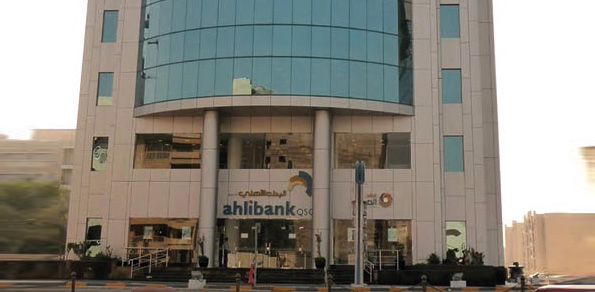
Salah Murad, chief executive of ahlibank QSC in Qatar, sets out the key priorities for his institution: securing technology, complying with anti-money laundering controls, and managing costs and, of course, providing a service that is convenient for customers.
He told Cash & Trade how Ahli is tackling this agenda: “We have started our journey of recognising the importance of this part of the business:
- We have implemented a major upgrade to our internet banking platform, which allows both individuals and businesses to transact with convenience.
- Internally, we have created solutions for inward STPs (straight through processes) while adhering to the priorities above.
- We are edging closer towards launching our mobile banking platform in the second half of 2014.
- We are serious about acquiring a “customer-on-boarding” platform.
- We will soon offer our own trade portal.
- We are the first bank to offer our corporate customers a payment gateway solution sponsored by Qatar Central Bank: Q-Pay.”
Competition from the giants
Always Gulf banks have had to contend with competition from the international giants able to offer intercontinental networks and specialist expertise in areas such as capital markets or project financing.
But these are specialist areas that are occasional needs only even for large corporate clients.
What is different today is the possibility that because electronic technology has become so crucial, the global banks will be serious rivals for the transaction services that are the stuff of everyday business activity, and not just for the very largest companies.
Indeed, because they have become used to instant online services in their use of financial services as personal consumers, business managers are likely to have higher expectations for the services they can expect at work.
It is demand from the Asia-Pacific region that is driving this trend.
And given the importance of east Asia as a trading region, it is no surprise that the big transaction banks have identified the processing of cross-border payments as the top priority area for improving the services they offer. And this order of priority was the overwhelming choice of banks serving Asia-Pacific.
This is particularly relevant for the major Gulf economies. They depend heavily on trade with east Asia, importing industrial and consumer goods from countries such as China, Japan and South Korea, and exporting oil, gas, petrochemicals and bulk industrial products in return.
So Asian demand for highly efficient cross-border payment services is a demand to which Gulf banks will have to respond if they are to remain important players in the provision of trade and payment services in support of the booming level of business between the Middle East and the Far East.
Integration is critical
Moreover, Misys’ latest survey of banks providing transaction services shows that the major global banks have recently made good progress in consolidating key related business lines.
Cash management, supply chain finance, the effective use of working capital, trade services and payments are increasingly treated as a single area of activity. Instead of having to access these services individually, clients can often now tap into them as a whole package, from which different strands are suitable for different specific needs.
But the banks surveyed admitted that the technology delivering these various transaction products is lagging behind and is often not integrated. And where they are, it is usually in tailor-made packages for a few big clients that are not in a form which could be marketed to the wider business community.
So the next step, as the large banks now recognise, is integration of the technology so that transaction banking can be offered to customers in an electronic and automated form that is joined in a whole package.
“Traditional trade is largely dominated by manual, paper-based processes. The opportunities for dematerialisation leading to increased efficiencies are immense,” points out David Hennah, head of trade and supply chain finance at Misys.
“We are beginning to see increased traction in internet banking, particularly for a multi-bank unified portal solution supporting trade, cash and FX solutions.”
This will cater better for customers’ rising expectations. And it will also save on cost and enable the banks to offer an integrated transaction banking package in a standardised way and thus at a price that is affordable for SMEs.
So with the big international banks thinking in these terms, the Gulf’s own banking community now faces a competitive challenge: can it adapt and find the means to invest in transaction banking services that are also automated and well integrated in this way?
New outlook on services
Certainly some institutions are already starting to think in those terms and organise their services accordingly.
At Alinma Bank in Saudi Arabia, Abdullah Mohammed Al-Amri says that his institution’s transaction banking priorities are the integration of cash management services into one system, and supply chain financing.
“Alinma is building the main services in blocks style, under the umbrella of one system, while increasing the customer base,” he explained to Cash & Trade.
Today’s banking market demands a readiness to constantly adapt and keep pace with the emergence of new needs and new techniques.
And this is exemplified by the steady increase in the use of the Bank Payment Obligation (BPO).
The BPO – an irrevocable undertaking given by one bank to another bank that payment will be made on a specified date after a specified event has taken place – provides the benefits of a letter of credit in an automated environment, without the drawbacks of manual processing associated with traditional trade finance.
At present only a minority even of major banks are fully equipped to offer the BPO, Misys found – partly because many business clients are only just starting to ask for much more basic products such as supply chain finance.
However, as with other transaction banking developments, demand is strongest in Asia Pacific. So now a significant minority of major banks are preparing to invest in the systems that will allow them to offer the BPO as a matter of routine.
What looks like a minority interest may now become mainstream practice before long, and Middle Eastern banks will probably need to keep pace if they want to keep their major corporate clients.
Further pressure to keep up is flowing from the way that some big banks are starting to rethink the role of correspondent relationships with regional players in markets around the world.
Many regional banks in the Gulf and elsewhere have traditionally derived much business through their correspondent ties with the big global institutions. But some global giants are now seeking to cut costs through automation and a reduced use of traditional correspondent banks in other countries.
Regional banks that find themselves on the wrong end of such decisions may have to decide whether to pull out of trade finance and international payments business based on correspondent links and become purely domestic – or whether to make the investments required if they are to offer these services in an efficient and cost-competitive form themselves.
“The ability to compete in the trade market requires a significant investment in time, money, people and technology. These high investment demands will continue to drive consolidation across the industry,” argues Hennah.
“This trend has been and will be accelerated further by the decisions made by Tier 1 banks to limit their credit lines and hence limit their correspondent banking relationships with lower-tier counterparties, driving some of those banks either to outsource or potentially to exit the trade business altogether.”
If Hennah’s analysis proves right, MENA banks will either have to find ways to provide competitive electronic international transaction services themselves or identify third parties who can help them do so.