
 There are signs that the Gulf Cooperation Council (GCC) Islamic finance institutions are increasingly looking to the UK in particular and the eurozone to a lesser extent to increase and diversify their trade finance, real estate and other investment portfolios. MUSHTAK PARKER takes up the story
London is already one of the world’s largest domiciles for Murabaha business mainly through contracts based on London Metal Exchange (LME) warrants. In fact, London-based, DDCAP Limited is one of the largest such commodity brokerage and intermediation firms serving the global Islamic finance market. But over the last few years it has also emerged as a major domicile for inward Islamic investment into the real estate, corporate finance and equities market in the UK.
The announcement of seven UK government initiatives on Islamic finance by British Prime Minister David Cameron at the World Islamic Economic Forum (WIEF), which was held in a non-Muslim country for the first time at the end of October 2013, seems to have given an added momentum to Shariah-compliant transactions, especially in the trade finance and real estate sectors in the UK and by association in Europe.
Cameron’s message for the industry and the world at large was clear. “Britain,” he maintained, “is a country ready to welcome your (Islamic) investment, a country that values your friendship, and a country that will never exclude anyone because of their race, religion, colour or creed. But if investing in London is good for you, then opening up London to your investment is just as vital for our own success here in Britain. We know we are in a global race for our economic future, so we are backing our businesses, seeking new markets and banging the drum for Britain to show we are a first-class destination for trade and investment.”
The two initiatives that have created a buzz especially in the Middle East region are the proposed issuance by the UK Treasury of its debut sovereign Sukuk and the launch of a £100m Shariah-compliant fund in conjunction with GCC and other investors to attract technology entrepreneurs from the Muslim countries to launch start-ups in Britain.
At the Euromoney Islamic Finance Conference held in London in February 2014, Sajid Javid, Financial Secretary to the Treasury, confirmed that the debut £200m Sukuk will be issued “sometime during the financial year 2014” and that the Treasury has appointed HSBC to advise on the issuance and City-based international law firm Linklaters to structure the transaction.
Javid said he expected the issuance to attract very good support from, inter alia, investors in the MENA region and South East Asia, and, of course, UK institutions and beyond. Already the Islamic Development Bank (IDB) President Dr Ahmad Muhamed Ali, and several top Islamic investors from the GCC, Turkey and Malaysia have expressed their interest in subscribing to the UK Sukuk.
Asked whether the Treasury may issue follow-up Sukuk if the proposed debut one is overwhelmingly oversubscribed, Javid did not rule out this possibility albeit the stated current policy of the Treasury’s Debt Management Office (DMO) is to issue an one-off Sukuk.
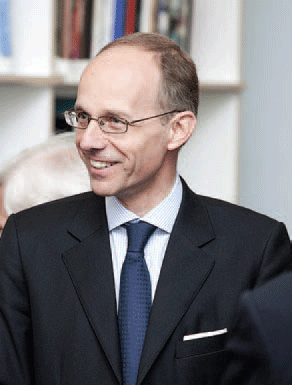
Finance Luc Frieden
Across the Channel, Luxembourg is also working on issuing its debut sovereign Sukuk – a €200m issuance. In December 2013 the new centre-left government tabled a Draft Islamic Bond (Sukuk) Bill No. 6631 to the Council of Chambers for deliberation before parliament votes on it. The bill was initially presented by the previous government, through the then Minister of Finance Luc Frieden, who is a strong supporter of opening Luxembourg to the Islamic finance industry especially from the Middle East.
Frieden at a conference in the principality in February 2014 confirmed that there is cross-party support for the debut Sukuk issuance and for Luxembourg’s Islamic finance proposition. He remains confident that his successor as Finance Minister, Pierre Gramegna, will continue to look favourably on pushing through the legislation and the country’s Sukuk issuance project.
The Ministry of Finance, under the Bill No 6631, has already identified three office towers in the Kirchberg area of Luxembourg that house government departments, as the asset pool for the proposed Sukuk issuance, which will be a Sukuk Al Ijarah (Sale and Leaseback).
There is no doubt that it is in the UK that GCC and other Islamic investors are most interested in. In the last few weeks several transactions in the UK real estate sector have been closed, involving Abu Dhabi Islamic bank (ADIB), 90 North Real Estate Partners LLP, Gatehouse Bank and the Islamic Bank of Britain (IBB).
At the same time, Sajid Javid also announced at the Euromoney conference that the UK government’s Help to Buy mortgage guarantee scheme can now also be used by providers of Home Purchase Plans (HPPs) (Islamic mortgages).
“From today (11 February 2014),” said a Treasury statement, “the rules have been amended to enable banks that sell HPPs to purchase a government guarantee for them. Additionally, the Islamic Bank of Britain has stated its intention of participating to offer Home Purchase Plans under the scheme. This will be particularly supportive to some Muslim homebuyers who have been unwilling to use a traditional Help to Buy mortgage because of their religious beliefs. However, the inclusion of HPPs in the Help to Buy Scheme introduces more choice for all consumers and perspective homebuyers.”
According to the Treasury, under an HPP, a property’s ownership is split between the customer and the bank. After buying a portion of the property with their initial deposit, the purchaser of the property pays regular instalments to the bank, covering rent for the portion they do not own and an acquisition payment. In this way, a customer gradually buys the property from the bank and eventually becomes the sole owner.
In order to purchase the government guarantee, banks will have to satisfy the same stringent criteria for an HPP as for a normal mortgage. HPPs sold in the UK are also subject to regulation by the Financial Conduct Authority (FCA), in much the same way as mortgages.
The Help to Buy extension, says the Treasury, builds on the government’s commitment to support the UK Islamic finance market, worth around £11bn each year, and retain London’s position as the premier Western Islamic financial centre.
The Treasury has also recently eased lending restrictions on, and oversaw the introduction of, two new Islamic financial products. The UK Department of Education, for instance, is making government student loans available to Muslims and others interested in ethical finance on a Shariah-compliant basis.
Similarly, the UK Department of Business Enterprise is also making government business loans available to Muslim-owned SMEs on a Shariah-compliant basis.

of London
The £100m Shariah-compliant Technology Fund is the brainchild of Boris Johnson, the Mayor of London. The aim is to attract technology entrepreneurs from Muslim countries to launch start-ups in Britain. He emphasised at the launch of the fund that “Britain is a global hub for the tech industry, while the Islamic world has young entrepreneurs with ambitious ideas. It’s very important that London should be a strong Islamic financial centre – and it’s clearly going to be of great benefit to those who need Shariah-compliant loans and mortgages. But, above all, it enables us to go ahead with the financing of quite stupendous projects.”
The fund is a joint venture between the British government and other Muslim countries such as the UAE, Saudi Arabia and Malaysia, which have all invested in technology hubs in their own countries. Quantum Capital and Ernst & Young’s Global Entrepreneurial Network are involved in the establishment of the fund, which will primarily fund start-ups and give technical advice on various related issues.
In the equities sector, the London Stock Exchange has also launched a Shariah-compliant UK Equity Index to attract GCC and Malaysian investment into FTSE 100 companies.
Not surprisingly, Gulf Islamic banks are rethinking their strategies regarding the UK and the eurozone. In January 2014, one of Qatar’s largest Islamic banks, Masraf Al Rayan, completed its £24.21m acquisition of the Islamic Bank of Britain plc (IBB), the UK’s only Shariah-compliant retail bank, which was established in 2004.
The acquisition, according to a statement from IBB, was done through Al Rayan UK Limited, the London-based subsidiary of Masraf Al Rayan. The completion of the takeover of IBB by Al Rayan UK follows a cash offer made on 28 November 2013 for which Masraf Al Rayan received valid shareholder acceptances exceeding 95 per cent, together with approval of the UK’s Prudential Regulation Authority (PRA) for the Qatari Islamic bank to take control of IBB.
Adel Mustafawi, Group CEO of Masraf Al Rayan, explained the rationale behind the takeover in a statement: “IBB is considered the pioneer of Islamic banking in Britain and has very strong awareness amongst consumers there. This provides the opportunity for Masraf Al Rayan to expand its footprint and to introduce its range of products to a fertile market, which has great potential for continued growth. It will also enable Masraf Al Rayan to offer its existing Gulf-based customers additional services as they expand their activities into the UK. Masraf Al Rayan’s vision is to become a leading and innovative international financial institution and acquiring IBB represents an important step in achieving this.”
Another major Islamic bank, Abu Dhabi Islamic Bank (ADIB), last year opened a branch in Knightsbridge in London. It did not take long for ADIB to expand into the UK market. For instance, it arranged a £20m structured Islamic financing facility – its debut deal in the UK real estate sector – to fund the development of Westbourne House, an office-cum-retail property in Central London. The financing was arranged for a consortium of GCC investors who purchased the property in 2012 with the aim of converting it into luxury residential apartments.
According to Arif Usmani, global head of wholesale banking at ADIB, the bank “welcomes the increasingly high-profile role being played by the UK’s financial services sector to encourage the global acceptance and growth of Islamic finance products and services. Resilient demand from international buyers for prime residential real estate has underpinned the performance of London’s property market, which has outpaced most other markets in recent years.”
In another transaction, 90 North Real Estate Partners LLP, an independent Mayfair-based investment advisory firm, specialising in Shariah-compliant real estate investment, advised a Middle Eastern investor represented by Dubai-based Arzan Wealth on the purchase of Crossley Retail Park, Worcestershire, in a £41.5m deal, which is projected to give a net initial yield of 7.3 per cent per annum to the investor. The transaction was financed through a Shariah-compliant debt facility provided by Aareal Bank.
According to Nicholas Judd, Founder Partner of 90 North, “the investment platform we manage in partnership with Arzan Wealth has now acquired approximately £110m of property and we are seeking further substantial acquisitions across a range of real estate sectors for 2014”. 90 North has over the last 18 months transacted on seven assets with a value of about £200m including central London developments, and income producing stabilised warehousing assets and approximately 1,800 student housing beds at campuses in Canterbury and Bradford.
One UK-authorised Islamic investment bank that is adding further value is Kuwait-owned Gatehouse Bank, in which the Kuwait Investment Authority, the Kuwaiti sovereign wealth fund (SWF) has a large equity stake.
Gatehouse is not only structuring deals for Gulf investors but further afield from Malaysia. In February 2014, for instance, the Bank structured the £75.75m acquisition of Unilever’s UK and Ireland headquarters office in Leatherhead, Surrey, by Lembaga Tabung Haji, the Malaysian Pilgrims Management Fund. The transaction will provide Tabung Haji a net initial yield of 6.18 per cent, according to Gatehouse Bank, which acted as Investment and Shariah Adviser for the deal.
This is the third such transaction arranged by Gatehouse Bank for Tabung Haji in the UK real estate market and is a key part of its wider global investment strategy.
Gatehouse Bank recently also launched a £700m joint venture with Sigma Capital, the Edinburgh-based residential and urban regeneration specialist, which will support the roll-out of an initial 2,000 new privately rented residential properties in the UK, with the potential to grow the portfolio to around 6,600 new rental homes once fully developed.
The initial phase has a total development cost of £200m and the development cost of the entire proposed portfolio is estimated at £700m. Under the terms of the joint venture, Gatehouse will deliver the equity element of the venture and both parties are in negotiations with a number of leading banks for financing to complete the initial £200m development phase.
Gatehouse Bank currently has a real estate portfolio worth in excess of £1bn across the UK and US. Gatehouse Bank also issued two Sukuk in December 2013, comprising £8.2m each, with a total of £16.4m. The Sukuk are secured by existing real estate assets-under-management, the regional British Telecom (BT) headquarters in Leeds, UK, and paying a distribution of 4.25 per cent and 6.25 per cent per annum over a seven-year term. “Investors,” said Gatehouse Bank in a statement, “will earn a return by virtue of the profit earned through the rent agreement of the building. Both sukuk were arranged following a refinancing of a major headquarters building let to British Telecommunications Plc until September 2020.”
Rental payments from the tenant will be applied to fund payments to the Sukuk holders (largely from Kuwait and the GCC) on each periodic distribution date. One Sukuk benefits from a repurchase undertaking from Gatehouse Bank on the third anniversary of issuance and also benefits from security over the underlying real estate asset, while the second remains subordinated.
As Abdulaziz AlDuweesh, chief investment officer at Gatehouse Bank, explained: “Gatehouse Bank is positioned to expand the Sukuk offering of the business in line with an increase in demand. The UK remains a great opportunity for developing this product offering.”
Another company, Apache Capital Partners LLP, the London and Gulf-based real estate investment management firm, and Tadhamon Capital BSC, the Bahrain-based Islamic investment company, recently launched a £100m joint venture with McLaren Property for the development of a major student accommodation and office scheme in Shoreditch, London, which was acquired from Ireland’s National Asset Management Agency (NAMA).
Shariah-compliant debt financing for the development is being provided by Royal Bank of Scotland and the office development has been forward sold to Helical Bar Plc for £21m. This transaction represents the second successful acquisition by McLaren Property, Apache and Tadhamon from NAMA.
According to Trowers & Hamlins, the City law firm which acted for Tadhamon and Apache, the stable income-generation and capital growth potential of student accommodation makes it a particularly popular asset class right now.
Another Islamic bank making waves in UK-GCC investment relations is Gulf-owned EIIB (European Islamic Investment Bank), which is regulated by the UK’s Prudential Regulation Authority (PRA).
EIIB has set up a joint venture with Rasmala Group, a Dubai-based GCC family investment banking and asset management firm, EIIB-Rasmala, which recently launched the Rasmala Trade Finance Fund. The joint venture has already launched Rasmala Global Sukuk Fund, the Rasmala Leasing Fund and the Rasmala GCC Islamic Equity Income Fund.
Eric Swats, head of asset management, EIIB-Rasmala, explained in a statement that the Rasmala Trade Finance Fund “will cater to the increasing demand for low risk, income-orientated Sharia-compliant investment products. The fund offers a diversified portfolio of trade finance transactions exposed to different geographies, industry groups and individual companies in order to lower exposure to rising interest rates. The fund will obtain enhanced investment returns from assets that can often be undervalued due to lack of recognition of their intrinsic payment capabilities. The overall strategy of the fund is expected to provide it with a means to achieve global diversification in both the primary and secondary trade finance markets”.
EIIB-Rasmala, like Gatehouse Bank, is also venturing outside the UK. It acted, for instance, as lead arranger and book runner for the $100m Sukuk Al Wakala Programme launched in late 2013 by FWU AG Group, the Munich-based financial services company with growing interests in the Takaful (Islamic insurance) sector, and the first tranche of $20m, which according to FWU Group was well oversubscribed.
The programme and first tranche Sukuk were issued through Salam III Limited, a Jersey-registered SPV, on behalf of the issuer and obligor, ATLANTICLUX Lebensversicherung S.A (ATL), a subsidiary of FWU AG. International ratings agency Fitch assigned an investment grade BBB- rating to both the Salam III Limited’s $100m Sukuk Programme and to the first $20m tranche.
Each tranche will have a term of five years, with profit distributions made quarterly to investors on a fully amortising basis. The profit rate is projected at seven per cent per annum.
The group plans to issue a series of Sukuk under the programme during 2014. This issuance follows on from FWU’s debut $55m Sukuk Al-Ijarah issued in November 2012.
The transaction, said EIIB-Rasmala in a statement, is a securitisation of Takaful (Shariah-compliant) insurance policies and provides an opportunity for investors to participate and invest in Sukuk certificates backed by ATL, which is a multinational insurance provider.
According to Harris Irfan, managing director of EIIB, “this issuance is unique in that it facilitates investor exposure to a quality, fully Shariah-compliant and rated European credit. Moreover, the issuance is asset-backed rather than asset-based, due to its securitisation of Takaful insurance policies – a movement in the right direction for the Islamic finance industry by linking the financial economy with the real economy”.
Similarly, Dr Markus E. Fischer, chief financial officer of FWU Group, is confident that “this issuance represents an important step for FWU to expand its funding sources into the Shariah-compliant capital markets. This issuance also further strengthens FWU’s ‘SALAM’ brand in the Islamic finance market”.
The Sukuk is a novel securitisation of Takaful assets – the first of its kind (a Shariah-compliant insurance-linked securitisation) to date in the sector. FWU AG similarly in its debut issuance also pioneered the first Sukuk to utilise a computer software programme and the associated intellectual property rights under an Ijara (leasing) structure.
This latest Sukuk will fund a set of retakaful (or re-insurance) transactions for one of FWU’s five main subsidiaries, ATL. The proceeds from the asset-backed Sukuk will be used to fund sales commissions on unit-linked life insurance policies and upfront acquisition costs of new business.
Elsewhere, Bahrain-based First Energy Bank (FEB) recently also arranged a €25m Murabaha facility for the Holland-based Kore Coal Finance B.V., which is a subsidiary of Sapinda Holding B.V. The proceeds of the financing will be used by Sapinda to invest in developing coal mining assets it owns in South Africa.
The Murabaha facility complements the recent €55m conventional Profit Participation Notes issued by Kore Coal Finance, the proceeds of which will be used to invest in the same coal mining assets. The Murabaha facility matures in October 2016. FEB acted as the investment agent and the security agent for the transaction.