
Dear Reader,
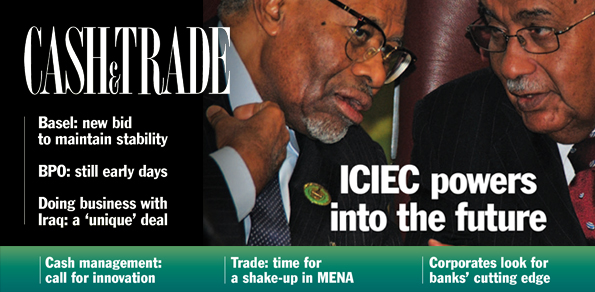
The work of the Islamic Corporation for the Insurance of Investment and Export Credit (ICIEC), the standalone export credit and investment risk insurance agency of the Islamic Development Group, has changed the face of business in its 56 member countries.
And this year, as it celebrates 20 years of outstanding success, ICIEC has designed a new strategy focusing more on investment insurance and project finance. But, at the same time, it will naturally continue to underwrite its export credit insurance business, which it sees as an essential part of its mandate to support the exports of its member countries
Indeed, all those that it deals with will have reason to congratulate the corporation for coming such a long way in realising its vision of becoming “the internationally recognised leader in the provision of Shariah-compliant export credit and investment insurance and reinsurance in its member countries” and effecting its stated mission of providing such services to encourage intra-Islamic trade, especially exports, and to facilitate the flow of foreign direct investments between member countries.
Currently, intra-Islamic trade constitutes some 18 per cent of the total trade of the Organisation of Islamic Cooperation (OIC) countries, but, as we report in this issue, ICIEC now has its sights on increasing that to 25 per cent by 2020.
Also in this edition, we look at how MENA is said to be punching below its weight in terms of international trade. Although countries in the region have furthered their integration into the global trade system over the past decade, it’s believed that they still have considerable work to do to improve their position.
Some of the region’s countries have yet to become members of the World Trade Organisation and the GCC has still not concluded a free trade agreement with the EU, which is now its biggest trading partner (trade between the two climbed to €145bn in 2012).
On the subject of the EU, another correspondent points out there are signs that the Gulf Cooperation Council Islamic finance institutions are increasingly looking to the UK in particular and the eurozone to a lesser extent to increase and diversify their trade finance, real estate and other investment portfolios.
London is already one of the world’s largest domiciles for Murabaha business mainly through contracts based on London Metal Exchange warrants. In fact, London-based, DDCAP Limited is one of the largest such commodity brokerage and intermediation firms serving the global Islamic finance market. But over the past few years it has also emerged as a major domicile for inward Islamic investment into the real estate, corporate finance and equities market in the UK.
The announcement of seven UK government initiatives on Islamic finance by British Prime Minister David Cameron at the World Islamic Economic Forum (WIEF), which was held in a non-Muslim country for the first time at the end of 2013, seems to have given an added momentum to Shariah-compliant transactions, especially in the trade finance and real estate sectors in the UK and, by association, in Europe.
At a wider level, we look at the latest Basel Committee’s bid to maintain banking stability. In essence, it believes that a simple, non-risk based “backstop” measure will restrict the build-up of excessive leverage in the banking sector.
Implementation of the leverage ratio requirements has now begun with bank-level reporting to national supervisors of both the ratio and its components, and there will be public disclosure starting 1 January 2015. The committee says it will carefully monitor the impact of these and “any final adjustments to the definition and calibration of the leverage ratio will be made by 2017”.
Another article in this issue looks at one major corporate’s wish for banking nowadays to be more about how innovative a funding structure can be, rather than the proverbial “offering the best service”.
In this respect, we publish a classic example of just that, giving readers an in-depth look at how a “unique” financial structure allowed an Indian company to feel secure about a large contract with Iraq. The key to it all was receiving assurance on payment, “due to limited control after supplying the material and the volatile nature of the country”.