
Dear Reader,
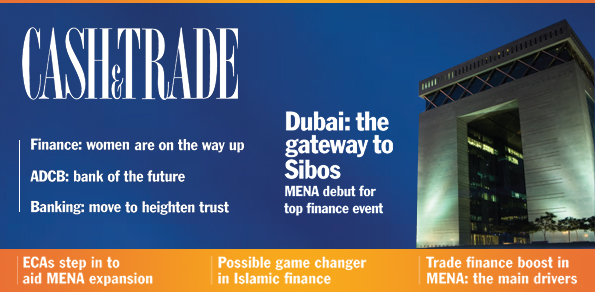
This is a landmark year for MENA in that the world’s premier financial services event is for the first time being staged in the Middle East. The success of Sibos can be seen in a snapshot: a mere 300 people attended its first outing in Brussels but now, 35 years on, some 7000 participants are expected to gather in Dubai.
The first Sibos was essentially a seminar organised by the international payments provider SWIFT to strengthen relationships with its users. Today, SWIFT is still the organiser. But the event that it created has grown and diversified into an annual forum for the exchange of ideas and contacts across the international financial services sector. As ever, too, a lot more than banking will be on the agenda. Trade finance, cash management, financial technology and security will all be central themes.
Also, the choice of Dubai as this year’s host could hardly be more topical. Because at the centre of the Sibos agenda are issues of risk management and payment security – hugely relevant to the Middle East at a time when political tensions are running in parallel with the economic resurgence of the Gulf economies. Not only do we take a long look at Sibos in this issue, we also pick up on the point of MENA expansion, which now has the increased backing of export credit agencies (ECAs), which have boosted their support for Gulf mega-projects over the past few years.
In the wake of the 2008 global financial crisis, ECAs gained importance as some looked to tap more sources of funding. And, with deal size on the up, they look set to continue to play a major role in the region’s growth, particularly in the petrochemical and power sectors.
ECAs are active in several classic trade businesses in the Gulf. For example, in August Air Arabia closed the 12-year financing on its new Airbus A320-200 aircraft using an ECA facility supplied by Germany’s KFW Ipex and covered by Euler Hermes. But big bucks – and in some cases multiples of billions – are also being provided by ECAs via project finance structures.
A recent high point for ECAs was Saudi Aramco and Dow’s $20bn Sadara petrochemical project in Jubail, Saudi Arabia. ECA direct loans and guarantees (where banks supply the underlying funding) account for more than 50 per cent of the $12.5bn debt, dwarfing the deal’s $2.2bn commercial bank tranche. ECAs were the first participants in the financing to be approached by the sponsors and their advisers, with the transaction designed to maximise ECA support.
Another element of “rise” in the MENA financial sector is that of the prospects of women, who now hold a range of senior positions in banking and treasury.
In another article in this issue, we look at the “determination, self-confidence and a willingness to defy stereotypes” that are taking women to the top in finance in the Middle East today.
But ability alone is not always enough. In a world where men still occupy most senior posts, female contenders for career success in banking, treasury or accounting teams at major businesses must demonstrate exceptional talent and willpower to break through.
However, today a number of women have shown that it is possible to pursue a successful career in finance – and reach top management roles such as chief accountant, finance manager, financial controller and CFO (chief financial officer).
With trade finance very central to banks’ boardrooms in the region at present and topical globally for a variety of reasons, we have in this edition published extracts from CMM’s Tajara Monitor research series on the leading countries within the GCC.
The GCC Tajara Monitors look in depth at trade finance in each of the GCC countries and at the underlying drivers of the markets.
Also, following on from the success of the Tajara Monitors that focus on the MENA region, CMM plans later this year to extend its finance research series to include the key Asian markets – and there will also be a Global Trade Finance Monitor covering internationally systemically important banks active in trade finance.