

A mere 300 participants attended the first Sibos. Thirty-five years on, more than 7,000 are expected for the world’s premier financial services event being held for the first time in the Middle East.
PAUL MELLY looks at what’s on the agenda.
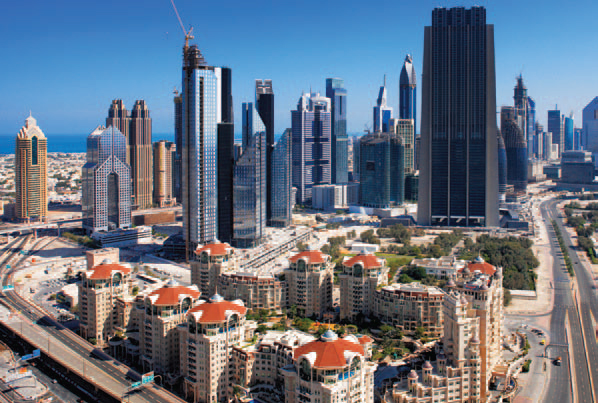
When some 7000 participants gather in Dubai for the 35th edition of Sibos, this will mark a Middle Eastern début for an event that can claim to be the world’s most important financial services conference.
And a lot more than banking will be on the agenda. Trade, cash management, financial technology, securities and markets will all be central themes.
When the first Sibos took place, in Brussels in 1978, it was essentially a seminar organised by the international payments provider SWIFT to strengthen relationships with its users. There were 300 participants.
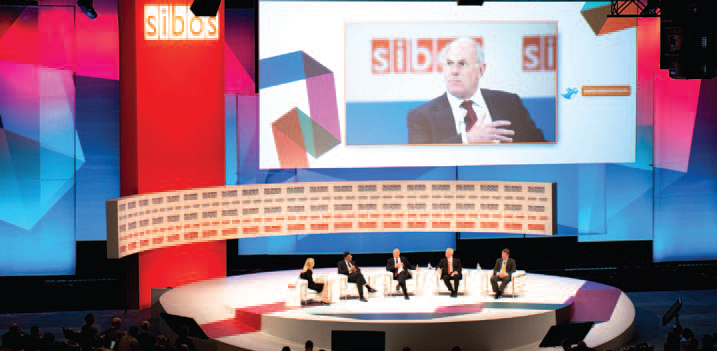
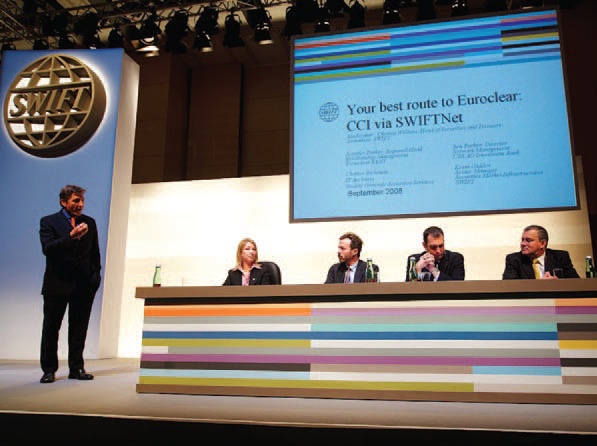 Today, SWIFT is still the organiser. But the event that it created has grown and diversified into an annual forum for the exchange of ideas and contacts across the international financial services sector.
And the choice of Dubai as this year’s host could hardly be more topical. Because at the centre of the Sibos agenda are issues of risk management and payment security – hugely relevant to the Middle East at a time when tumultuous political tensions and violence in Egypt and Syria are running in parallel with the economic resurgence of the Gulf economies.
How banks expand their capacity to finance trade and manage cash services for their clients while simultaneously limiting risk and meeting the tough prudential requirements of the new Basel III regime is going to be a key question for the industry.
But there are challenges for the governments of the region, too. Progress towards the integrated regional market that the Gulf Cooperation Council aims to create has been patchy. Indeed, particularly in the financial services arena, the growing sense of shared business identity and cross-border investment is yet to be matched by a harmonised approach to regulation and the liberalisation of the market.
Governments still tend to decide policy and legal frameworks on a national basis – which of course adds to the complications and the costs faced by those banks that are active in several different states in the region. The reform of markets and regulation continues to evolve, edging steadily closer to international norms, but it does so at a pace and in ways that vary from country to country.
Greater harmonisation might suit not only the big international banks, for whom the Middle East is just one of several major business regions around the world, but also those Gulf financial institutions that are gradually building themselves into substantial regional players, with local operations in a number of markets.
But Sibos 2013 will also be addressing issues of broad concern to banks all over the world, such as securities regulation, the automation of payments or how to make the most effective use of data.
And, naturally, given the location of this year’s event, Islamic finance will also feature on the agenda.
This is already a major product area for many financial institutions in the Gulf that seek to cater to the needs of local consumers and businesses. But at Sibos 2013 there will be a chance to consider how far Sharia compliant products can move beyond this niche role to become an absolute mainstream alternative or complement to conventional banking in the wider international market.
 Another key Middle Eastern subject on the schedule for Dubai is a debate about the development of financial centres in the Gulf – where a number of cities now compete in positioning themselves as hubs for banking and investment activity. What are spin-offs for local economies and does it make sense to have so many cities competing in the same arena; do they need to rationalise or specialise?
These are changing times for banks in the Gulf. The liquidity squeeze provoked by the global financial crisis is now over and the region is flush with funds; and now, at last, governments are starting to feel more confident about the international economic recovery.
But there are challenges, too, particularly the political instability in Egypt and Syria, two key destinations for re-export trade from the UAE. And oil prices have softened, although not enough to seriously constrain Gulf countries’ capacity to invest in major projects.
This is the broad context in which both local and international banks must make lending decisions and compete for business – and against which they will be discussing the outlook for their industry as they gather at the SIBOS conference in Dubai on 16-19 September.
The opportunities…and competitiveness
RBS is well placed to assess the current state of play in MENA. It is a major international bank with well established clients in the Gulf region, serviced by operations in Dubai and Doha (where the bank has recently applied for a Category 1 banking licence in the Qatar Financial Centre).
Lloyd Caughey, RBS’ head of transaction service origination for the Middle East and Africa, is based in the Emirates and knows the region well. He explained to Cash & Trade how today’s buoyant conditions in the Gulf Cooperation Council (GCC) countries contrast sharply with the constraints of a few years ago.
 “In 2009, there was a liquidity shortage because of the international crisis; international banks were very reluctant to provide US dollar financing in the GCC. As a result, local banks were also short of dollars and forced to concentrate increasingly on lending in local currencies such as the UAE dirham. But the situation has reversed to almost pre-crisis levels since then.”
Caughey explains that as international banks rebuilt their liquidity, they regained an appetite for investing in the Gulf market, where economic growth had remained generally much more resilient than in Europe. This economic growth has resulted in a flow of dollars back into the region.
As with most countries worldwide during the crisis, Arabian peninsula governments have been deferring plans to launch major new industrial projects because world demand for the goods that these would produce remained fragile.This now seems to be changing, pointing to a more optimistic outlook for the international economy.
In recent months for example, the UAE announced a large project as part of the establishment of Emirates Global Aluminium by Mubadala and the Investment Corporation of Dubai.
“The result has been a highly liquid Gulf financing market, with ample US dollars and other currencies available to local banks – who can, therefore, compete strongly for business,” says Caughey. “This has pushed interest margins on lending down. However, Gulf banks continue to lend at these low rates. This is their home market and they feel comfortable with the level of risk.”
Caughey explains:“The perception of risk has changed significantly from the days when GCC banks looked to the world market; they have come to see that it’s not necessarily safer to invest in Europe or other developed markets and are content to have some balances at home. A lot of the local assets are now seen as attractive from a risk point of view.”
Moreover, Gulf banks are not currently subject to the tough Basel III regulatory criteria that the big international banks have to meet, and which impose heavy capital requirements; they are still governed by Basel II prudential requirements. UAE banks will start implementation of Basel III in increments from 2013 onwards and this will be complete in 2019.
So competition is intense, often with up to 10 banks, some local and some international, chasing a major deal or client. As a result, many international banks have become more selective in the range of market segments that they target and the services they offer.
However, despite this challenging environment, RBS sees the Gulf as a region of opportunity, where it is competitive in its chosen target market.
“Most of our clients are the large local corporates, including many of the large parent companies. Generally, they entrust their local transaction banking business to local banks here. But many have substantial operations requiring transactional services in many other parts of the world,” says Caughey.
 “So we support this international activity, including their overseas subsidiaries, through transaction accounts, trade financing, treasury services, corporate lending and other products.”
The large family trading businesses are also important customers.
“Their service requirements tend to be quite traditional. They are seeking to reduce risk and improve liquidity; technology is less of a priority and they are cautious about taking up some of the newer products such as supply chain financing,” Caughey notes.
“However, on the trade side, there has been quite a strong trend towards more use of open account. If you want to do this, you have to start analysing the risk that you are taking.”
So Gulf buyers have had to accept the need to provide financial information, so that their suppliers and banks can confirm that the credit risk is acceptable.
“ Family companies will not generally provide their financials to a bank unless we have shown that we are serious about supporting them and developing a service relationship.”
As banks gather in Dubai for SIBOS, those that are operating in the Gulf region will bring a number of issues to the debate, Caughey believes.
“The political instability in some key regional trade markets will be topical at Sibos. There has been some progress but it remains a difficult environment. The uncertain condition of these countries has an impact on the activity in the UAE, which is one of the world’s most important re-export hubs.”
There are banking industry issues to tackle, too. In particular, there has been some discussion about how the various GCC countries might harmonise aspects of regulation and the legal environment.
“At present they are all edging towards international norms, but each is following its own path in doing so. Therefore, parties still need specific legal advice on what the implications of specific contracts are in each country,” explains Caughey.
“So people are now talking about the need for a common GCC approach.”
2 Comments
Sibos: how SWIFT’s ‘investment’ grew and grew http://t.co/d2qYKzAtYi
Sibos: how SWIFT’s ‘investment’ grew and grew http://t.co/ghMxV2Thci