
Dear Reader,

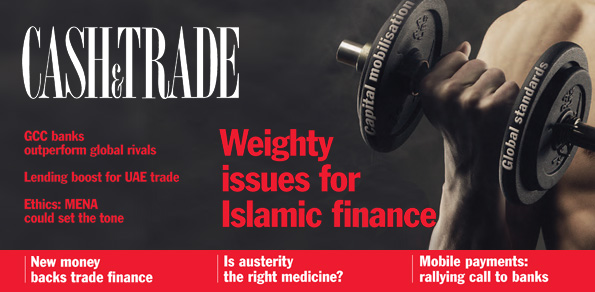
One of the more illustrious names to appear regularly in our pages is that of Dr Ahmad Mohamed Ali, president of the Islamic Development Bank (IDB) Group, who recently voiced some of the most contentious issues said to be facing the multilateral development bank of the Muslim world and the Islamic finance industry per se.
These are uniform global Shariah standards, and capital and resource mobilisation.
At the 10th Annual Summit of the Islamic Financial Services Board (IFSB) held in Malaysia, Dr Ali called for the establishment of a single, globally accepted Shariah Committee of Last Resort, which would introduce uniform standards and give the global Islamic finance industry much-needed structure and allow it to grow further.
As we explain in our Cover Story article in this issue, the call for uniform Shariah standards for the Islamic finance industry is not new. In fact, there are those who believe that the IDB should have called for this some two decades ago. But it is better late than never.
In terms of capital and resource mobilisation, the board of governors of the IDB Group, cognisant of the projected increased demand by its 56 member countries on the multilateral’s resources and the call to fund projects that are aimed at generating employment especially for the youth, rose to the occasion with a vengeance.
They approved, on the one hand, a massive increase in the bank’s authorised capital to ID100bn (100bn Islamic Dinars) (about $150bn) from the current ID30bn; and in the bank’s subscribed capital from ID18bn to ID50bn ($75bn) respectively. This makes the IDB the largest multilateral in terms of subscribed capital compared to peer institutions such as the World Bank, Asian Development Bank and the African Development Bank.
For banks in the GCC, there was good news on the publication of a new study that showed they have continued to grow and outperform international banks.
The banking industry in the Middle East settled at single digit revenue growth in 2012 with a 6.9 per cent increase, although the rise in profits was slightly higher at 8.1 per cent, stemming largely from extraordinary income sources.
These, explains an article in this issue, were among the findings made by the Boston Consulting Group based on 2012 annual results as reported by the banks in the first quarter of 2013. The point was made that “the performance of Middle East banks clearly exceeded that of their international counterparts, some of which experienced further revenue declines in 2012”.
But whilst that is sweet news for The Gulf, for ailing economies the question has been raised as to whether austerity is the right medicine. In this edition, Barbara S. Ismail, of Cash Management Matters, looks at the argument that says financial stringency as a cure for economic weakness may be the wrong action at the wrong time
Common wisdom, as promulgated by the IMF and other supranational organisations, has been that austerity is the best medicine for troubled economies, and countries from Argentina to Thailand have been treated with mega doses when they’ve turned to those agencies for assistance.
The current debate is not merely an academic one, but rather an argument with practical consequences for the real world, says the author, who makes the point that “if large government debt does not necessarily slow down an economy, and if government debt overhang has different consequences than private or individual indebtedness, then insisting on austerity as a cure for economic weakness may be the wrong action at the wrong time”.
But this issue does have a “good news for all” article that looks at the fresh funding that is now backing trade finance to boost liquidity levels and reduce the risks involved. Those stepping forward are such as pension funds, insurance companies and hedge funds.
These “alternative investors” have proved willing participants because they are provided with a relatively low-risk investment medium that generates a respectable return.