

More flexibility is needed in the new rules set to treat trade finance almost as harshly as much riskier activities. Tod Burwell, chief executive and president of BAFT-IFSA, speaks exclusively to PAUL MELLY
Banks’ capacity to extend trade finance to exporters and importers across the Middle East – and other world regions – could be sharply constrained by the tough new international regulatory regime being developed in the wake of the global crisis.
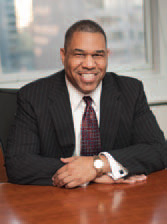
Tod Burwell, chief executive and president of BAFT-IFSA, the trade association for major players in transaction banking, is now campaigning to persuade regulators of the case for a more flexible approach.
But, as it stands, the Basel III framework of new rules is set to treat trade finance almost as harshly as much riskier activities, in imposing safeguards against any future problems in the world banking system.
Burwell believes that small businesses in particular could lose out as access to trade funding is curbed.
“We have met with regulators, policy makers and stakeholders in the EU, South Africa, Mexico, Asia and several countries around the world, including recently with the US authorities. The industry concerns are that the unintended consequences will limit the availability and increase the cost of trade finance and liquidity. The effects of this would be felt most severely by small and medium sized enterprises (SMEs), and emerging markets banks,” he told Cash & Trade.
Based in Washington, the BAFT-IFSA (the Bankers’ Association for Finance and Trade- International Financial Services Association) represents a wide range of banks engaged in financing trade and other transactions.
Burwell, a former global head of trade operations at JP Morgan Chase, joined the association’s staff as vice-president for trade products in January 2011, before moving on to the top job. Since taking up his post in September, he has been vigorously engaged in the campaign to secure a rethink of the way the proposed new rules would impact on international trade.
“Trade finance fuels the engine of global commerce, and even more so for SMEs and emerging markets economies. It is one of the lowest risk forms of corporate lending, directly connected to the movement of goods and services and jobs (ie, the real economy), and is not used for financial leverage. However, the short-term, low risk nature of trade is not considered in some of the provisions in the Basel III framework.”
This, Burwell fears, could have a painful impact in regions such as the Gulf where trade plays such a large role in the economy.
“Basel III is going to have a global impact on trade. Higher capital requirements for trade finance will result in less availability and higher prices for importers and exporters. Based on our discussions with several banks, there will be a disproportionately higher impact on lower credit-risk obligors, many of which are small and medium sized enterprises and/or emerging markets financial institutions. In markets and segments where trade finance is critical for growth, this is a significant concern.”
BAFT-IFSA is, therefore, pressing regulators for clarifications and adjustments to the rules that will make allowance for the relatively low-risk nature of trade finance transactions and the way that these risks would be guarded against under Basel III.
For Islamic finance – which, of course, plays a growing role in the Middle East – the impact might be less severe. But that appears far from certain at this stage.
“We have not looked specifically at the impact of Basel III on Islamic finance. The capital and leverage concerns at the enterprise level could be lower than conventional banks since the structure emphasises Tier 1 capital and leverage is not likely to be a constraint,” says Burwell.
“There could be greater impact from a liquidity standpoint. Nevertheless, to the extent that trade finance is requested from banks that are subjected to Basel III capital and leverage ratio impacts, even Islamic trade finance transactions could face an impact on the availability and pricing of finance.”
However, the campaign for a revision of the planned regulatory framework is certainly not the only item on Burwell’s agenda as he looks forward to 2013 – the year when Dubai will host Sibos, said to be the world’s leading international financial services conference, in September.
“BAFT-IFSA is the leading global trade association for international transaction banking,” he says.
“On behalf of our member organisations, we promote ‘thought leadership’ within the industry – engaging senior executives through our leadership councils such as the Heads of Transaction Banking (TBGL), Heads of Trade Finance (GTIC) and Regional Councils. We conduct ‘advocacy’ on behalf of the industry – on issues such as Basel III, Kazakhstan restructuring and US Export-Import Bank re-authorisation.”
He adds that the association also provides education and training to the industry – through a certification programme (CDCS), workshops, conferences and webinars. And it also seeks to build a “global community” across the industry – connecting practitioners through various trade, payments and compliance committees and working groups on industry issues, and facilitating networking at regional and global conferences.
“We engage with more than two dozen other industry and business associations on a national and global level to bridge solutions across financial institutions, service providers and the regulatory community that promotes sound financial practices enabling innovation, efficiency and commercial growth.”
Burwell hopes to see a growing BAFT-IFSA engagement with banks across the Gulf and the wider Middle Eastern region, reflecting its growing importance as a centre of trade and financial service activity.
“BAFT-IFSA has 185 institutional members from more than 40 countries including banks in Bahrain, Kuwait and the UAE. The Middle-East and North Africa are areas of interest for expansion and we believe we can provide increasing value to institutions in connecting them with other institutions around the world confronting similar industry challenges.”
However, he believes that if banks in the Gulf and other emerging economic regions are to make the most of the business potential that surrounds them, they will have to develop their systems and ways of operating to meet the competitive demands of today’s environment.
“Many banks are still dealing with legacy systems that have not only become outdated, but difficult to maintain, particularly when there have been bank mergers. The pace of regulatory change, the demands of clients in a dynamic global marketplace, and the expectations of immediate, on-demand access to information across the globe puts enormous pressure on banks to deliver. Cybercrime also is an ever-growing threat.
“These are huge challenges, but also opportunities for banks to leapfrog using modern IT capabilities.”
The development of modern technologies can enable banks to respond to the new demands, he points out.
“Cloud computing and mobile applications have made the world smaller and more dynamic, providing opportunities for banks to connect with their clients in a more value-added way. IT has truly allowed banks to re-invent their business model and re-define how they service and interact with clients.
“The movement towards Bank Payment Obligations (BPO) and mobile banking are just a couple of examples of how transaction banking has changed through technological developments.”
Burwell takes a relatively positive view of the condition of Middle Eastern banks as the region emerges from the past few years of turbulence in global markets.
“The general view is that many Middle-East banks were able to withstand the impact of the economic crisis, are well capitalised, and have good opportunities ahead. However, to the extent that the view on sovereign risk for any given country is impacted, individual banks within that location cannot fully insulate themselves,” he says.
But, as he points out, the region’s own problems have made themselves felt to some extent.
“Over the past couple of years, the Middle-East has experienced a different set of circumstances from other regions that have impacted the view of country risk. While not specific to the region, there has also been a heightened sensitivity to Know Your Customer (KYC) and sanctions regulations that have impacted certain countries.”
Outlook for Sibos
Looking ahead to the Dubai edition of Sibos, Burwell expects economic issues to shape the mood of the financial community in the run-up to the conference.
“The heart of debate in September 2013 will very much depend on the macro-economic development over the next six-nine months. What will be the state of the economy in Europe, US and China, given the obstacles that each of those regions faced in 2012? How will the rate of growth in the Gulf be impacted by those regions and what will be the success stories?”
Also, regulatory concerns will certainly not be far away.
“Several countries will have implemented Basel III by then – so what will be the early observations and lessons learned ? Given the shifts of trade lanes that continue to take place, I would expect the GCC (Gulf Cooperation Council) to be central to the discussion.”
Burwell says that BAFT-IFSA will work out the agenda for Sibos in mid-year, just a few months before the conference. That will ensure it is topical.
Both regulatory and economic issues will influence planning for the conference. And on the Sunday immediately before the gathering starts the association expects to host a forum of its global councils, as it usually does.
Looking at the development of BAFT-IFSA itself, Burwell has plenty of issues on the menu.
“BAFT-IFSA will continue to serve an important thought leadership and advocacy role for our members. The efforts of our London Group will seek to find ways to make trade finance more attractive for institutional investors,” he says.
“The Trade and Payments committees will continue to develop best practices and guidelines for banks. While the regulatory environment remains challenging, our newly launched Global Regulatory Committee will seek to prioritise areas where BAFT-IFSA advocacy can make a difference.”