

Middle Eastern corporates are expanding both regionally and internationally to diversify and grow their businesses, giving rise to an increased focus on how they manage their treasury operations, and the technology and systems they put in place. LIZ SALECKA reports.
MENA corporates’ choice of banks has become all the more crucial as they seek out partners that can support their expansion plans, and meet the funding, cash management, foreign exchange and trade finance needs of a group of companies operating across multiple countries.
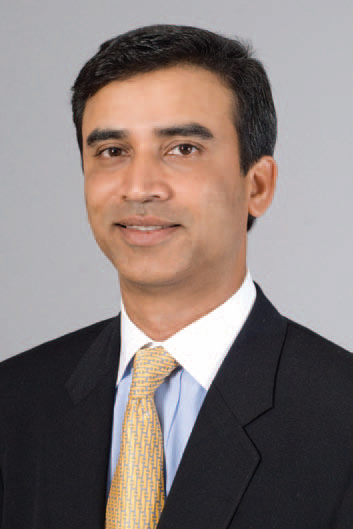
According to Asif Raza, managing director–head of treasury and securities services, MENA, J P Morgan, there are three key drivers behind the international expansion of Middle Eastern corporates:
- government initiatives geared at the diversification of local economies
- private sector recognition of the need to diversify
- accumulation of wealth by local companies.
“The diversification of the economy is a key priority for Middle Eastern governments as they seek to reduce their dependence on the oil and gas industries. They are also looking to bring new expertise and capabilities to the region so that they can diversify their business markets on the ground – and create more employment opportunities for a growing, young population,” he says.
He explains that this expansion is witnessed in a variety of sectors, including infrastructure, healthcare, education and telecoms, where companies are already active in multiple locations in the region. Trading companies are expanding their net internationally; and investments into downstream energy sectors such as petro-chemical companies are on the rise.
“Some companies have been expanding internationally for some time and are now moving into the second phase of expansion,” he continues, pointing out that their accumulation of wealth has made the funds needed for such expansion more readily available. “They are in a strong position to put their own capital into work via new and key acquisitions.”
The accumulation of wealth is a key driver behind the ambitious expansion plans of Mannai Corporation, one of Qatar’s largest trading and services companies, whose interests span oil and gas, automotive distribution, information technology, consumer products, travel and logistics among others.
Following its acquisition of a stake in Jordanian IT company UtilNet in 2010, it took a 35 per cent stake in Dubai-based Axiom Ltd, a pan-GCC mobile retailer and distributer, which has a presence in Saudi Arabia, Bahrain, Kuwait, Qatar and India in 2011.
Earlier this year, it completed the acquisition of Dubai-based jeweller Damas International, which has a presence in Saudi Arabia, Oman and Qatar as well as Kuwait, Lebanon, Turkey, Egypt and India.
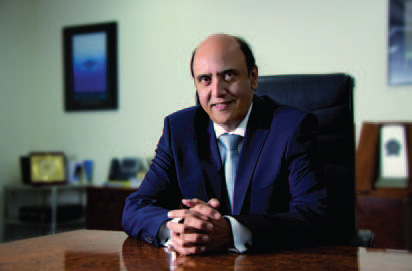 “We became a listed company in 2007 and since then have seen our profits grow at a rate of 29 per cent per annum,” explains Alekh Grewal, chief executive officer. “To sustain this level of growth in Qatar alone is difficult as it has a different business base. Here, oil and gas still account for most of the growth in GDP.”
He continues, “One of the difficulties we face when involved in mergers and acquisitions is that we are not just looking for an income stream, but to acquire a company that will provide growth potential. Today, we are looking further afield at Turkey and Egypt – we need to find the right fit.”
He explains that Mannai Corporation relies on its three main shareholders to support acquisitions, and that once such deals are constructed, financing is arranged through rights issues and bank loans.
“Banks in this part of the world are still willing to lend, but hesitant to provide finance without shareholder support. The markets here are also not that well developed so it is not that easy to do a bond issue and raise capital in that way. Acquisitions are hence largely funded by equity, and, typically, may involve a rights issue combined with bank finance.”
Cash management needs
Cash management is another huge topic for companies looking to expand internationally.
Raza points out that there are multiple factors to consider such as capitalisation requirements; the tax requirements and tax treaties that prevail in different overseas markets; tax regulation in respect of repatriation of cash; and foreign exchange regulation.
“Key to everything for companies that internationalise is ensuring they maintain transparency of their cash flows and optimisation of their liquidity positions across the globe. Ensuring that corporates effectively manage counterparty risks in overseas territories is also vital to protecting their cash flows,” he says, noting that the commercial risks involved in working with buyers and sellers overseas must be mitigated, and effective cash collection systems put in place.
For these reasons, Raza believes that expanding companies need to use the services of a bank with a strong understanding of the regulation that exists in the overseas territories they enter. They also need a bank that has a good network in the market concerned – and people on the ground who are subject matter experts and can act as consultants.
“Global banks are well suited to this role as they have a global approach and the systems and people needed to help a company understand an overseas market, and mitigate the counterparty risks involved,” he says. “Where a Middle Eastern company has a strong relationship with a local or regional bank, then a joint partnership effort between the global and regional bank may be worth consideration.”
Tax issues have not been a concern for Mannai Corporation in its expansion plans because it is a GCC company that is growing regionally, although Grewal notes, “If you are looking at acquiring a business in Turkey, then it becomes much more complex as there is corporate tax to pay and a withholding tax on dividends.”
He, nevertheless, points out that crucial to his company’s growth strategy is its 60-year-long relationship with HSBC, which is supportive of its expansion plans, and whose online banking platform – HSBCnet – the company relies on for a range of services spanning cash and trade.
“Often it is not possible for our target companies to obtain finance at favourable rates, but we can help to organise a lower cost of funding for them. It is important for us to build relationships with banks, which will lend money to our subsidiaries,” he says.
Grewal believes that many local banks still face issues when it comes to supporting expanding companies. “It is harder for them to gain access to US dollars, and it is very expensive for them to offer funding in US dollars,” he says.
“At the same time, they do not have the same set up across the entire region nor the same variety of systems. They can provide working capital – but to offer a variety of services electronically is more difficult for them. With HSBC, we can perform so many functions online whereas local banks still rely heavily on the use of paper.”
Mannai Corporation meets its company-wide treasury needs via a centralised treasury operation, based in Qatar.
Grewal notes that the group treasury has not experienced any real challenges as a result of expansion because Mannai is moving into markets where business is conducted in currencies pegged to the US dollar, so it does not have to deal with different exchange rates.
“We do have a business in India, and have been able to make direct payments online to India out of Qatar,” he adds. “HSBCnet is a very strong electronic platform. When we make acquisitions, once we have day-to-day operational control of the company, and have restructured any debt, we bring them onto the same platform.”
Centralisation is key
At J P Morgan, Raza believes that having a centralised treasury is very important to those companies that expand internationally – and this all comes down to being able to maximise cash visibility and control, and optimise the global liquidity position, as well as improve counterparty risk management.
“Companies are recognising that they need to leverage the technologies available to have greater control over their treasury activities and a better grip on their cash management so that they can minimise their overall funding needs,” he says.
“Treasury centralisation is currently a big topic of discussion in the Middle East, and many companies are at different levels of implementation in achieving this. Some are taking a fast-pace approach while others are looking at a phased approach to achieve centralisation. They recognise that treasury centralisation is vital to supporting the growing needs of a group of companies.”
Saudi Arabia’s Almarai is one example of a rapidly expanding company that has taken advantage of the benefits of treasury centralisation. Although it relies on controllers on the ground in certain countries, cash collected throughout the region is centralised at its treasury in Riyadh.
However, here chief finance officer Paul Gay points out that, as the company internationlises, there may be a case for setting up a payment factory in another country.
Almarai is also currently conducting a cost-benefit study to identify the opportunities that may be presented by setting up in an international treasury centre in another country
“This will be a centralised, international treasury that uses all the latest technologies and electronic systems. We completely trust electronic solutions and believe this is the best way forward for a company like ours,” says Gay. n
Food giant pursues expansion plans
Riyadh-based Almarai, one of the world’s largest integrated dairy food companies, is pursuing a series of ambitious expansion plans, which have led to major acquisitions in segments such as bakery and poultry, as well as recent moves to access new sources of finance.
Earlier this year, the company launched a SAR1bn Sukuk Financing Programme to support its ongoing financing requirements.

Paul Gay, chief financial officer, explains that Almarai’s key objective is to become a leading regional player in the food and beverages sectors within MENA and surrounding Islamic countries, spanning as far as India and Malaysia.
However, the company is also seeking to grow its vertical supply chain, and this has called for expansion into other geographic regions, witnessed last year by its acquisition of farm operator Fondomonte SA, which owns and operates three farms in Argentina.
“As a KSA-business, we have developed long-term relationships with most of the banks that are present locally, including international banks with a local presence, and they are helping us to develop our business in and beyond the Kingdom and throughout the MENA region,” says Gay, pointing out that the company is focused on making acquisitions that will complement its dairy, foods and drinks portfolio specifically within the GCC and surrounding regions.
“However, because we are expanding our vertical supply chain, we are now operating more internationally – and this means that we need bank support in regions such as Latin America, Europe and the United States,” he continues, adding that this strategy has given rise to a need for international bank services in areas such as international transfers and payments and risk mitigation.
“What we are looking to achieve is a good balance of bank relationships with both local and international banks.”
Gay explains that Almarai has a history of relying on banks with a local presence for services spanning the provision of finance, support with acquisitions and transactions and risk management. Locally based banks are also critical for their provision of regional cash management services, given the huge volume of collections that must be managed across the GCC region and beyond.
“Local banks bring Almarai ‘huge value’ in local GCC markets because they have a local retail presence and understand the regulations that prevail across the region in a way that has not yet been reached by some international banks.
“In this part of the world, there is also a huge reserve of funds, and banks are very willing to lend to us,” he continues, pointing out that locally-based banks have remained very keen to offer financial facilities to Almarai given its strong financial standing.
“What we have found when talking to international banks is that they are much more risk adverse; are seeking covenants; and are applying greater complexity to the contracts put in place.”
Here, he adds that in Almarai’s recent $83m acquisition of farmlands in Argentina, the financing required was arranged with the help of a local bank.
However, Almarai itself does not plan to rely on bank finance alone to support its future expansion. Earlier, this year, it launched Saudi Arabia’s first-ever Sukuk Programme, which was led by HSBC Saudi Arabia.
“We recognise that we need to plan for the future, and as part of this we have arranged a Sukuk Financing Programme – the first tranche of which was issued in March, and the second tranche of which is planned for October,” says Gay. “We are opening up more to the use of the bond markets to meet our financing needs.”