


Governments across the Middle East are now looking for ways to help SMEs. MUSHTAK PARKER, looks at what’s in store
Small-and-medium-sized enterprises (SMEs) form the backbone of many Middle East and North Africa (MENA) economies. In the aftermath of the global financial crisis, governments are seeking to generate employment, especially youth employment, and economic growth to try to mitigate the impact on the real economy.
The problem, though, remains lines of credit and cash management flows to SMEs, which have been effectively put paid to by a global credit crunch as mainstream banks hide behind the veil of caution and are reluctant to finance “risky” SME business. Government incentives, subsidies and even cajoling have failed to open the floodgates on SME financing in any meaningful way whether in the developed or developing world.
However, the Islamic Development Bank (IDB), at its 37th annual meeting of its board of governors held in April in Khartoum, signed MoUs to release $250 million of emergency financing specifically targeted at SMEs in Egypt and Tunisia with the aim of supporting projects generating youth employment.
Several IDB governors, who are the relevant ministers from member countries, lined up to exhort the multilateral development bank of the Muslim world to play a much greater role in boosting youth employment, primarily through financing small businesses targeting local communities in order to eradicate poverty.
Jordan’s Planning and International Cooperation Minister Jafar Hassan explained that “the challenges imposed on the Kingdom require more efforts to contain the negative impact of the political unrest witnessed in some Arab countries in order to enhance the economic and political reform process. Regarding priorities determined by the government for the upcoming stage, Jordan will focus on supporting SMEs, which would create the majority of work opportunities provided in the country”.
Similarly, the strategy of the International Finance Corporation (IFC), the private sector funding arm of the World Bank Group, for investments in countries such as Saudi Arabia is “to invest in selective transactions that can add value in terms of institution building, development of new financial instruments and SME development”.
To this end, the IFC has hitherto invested in the financial sector in the Kingdom, including Islamic housing finance, insurance, leasing, microfinance and a student loan programme with a current portfolio of $140 million, and also provides advisory services in mortgage finance, SME finance, corporate governance, risk management and PPP transactions.
In some MENA markets, Islamic SME financing is setting the pace. The most common SME financing instruments are Murabaha (cost-plus financing) and Ijara (leasing), which is commonly used in long-term procurement of machine equipment. In Turkey, for instance, Murabaha account for 90 per cent of SME financing, while Ijara for the remaining 10 per cent.
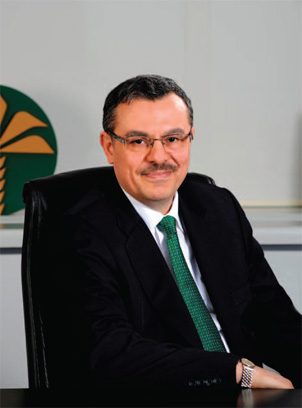
According to Ufuk Uyan, CEO of Kuveyt Turk Participation Bank (KTPB), the largest of Turkey’s four interest-free Islamic banks in terms of assets, participation banks are able to finance goods or services.
In this respect, he adds, “the lever effect that causes brittleness in the economy is less than that of conventional banks. In addition, SME needs for financing and Islamic banking principles usually match, so that they can work on a common ground with many products. As such, participation banks are expecting an increase in their market share for SMEs. Due to İslamic Banks social roles besides commercial activities, I do believe that they should increase their dealings with SMEs taking into account employment and equality of income distribution effects. In summary, Small is Beautiful”!
SME financing is very important for Turkey’s participation banks. “Due to their very nature,” explained Mr Uyan, “participation banks can give loans for financing certain goods and services. Thus, they mediate a direct trade between SME customers, who also are always in dire need of working capital and inventory. That is where participation banks come into the field with their expertise and Islamic banking methods.”
Indeed, KTPB’s SME portfolio share is higher when compared with conventional banks. SME financing constitutes 15.5 per cent of KTPB’s total loan portfolio to date in 2012, and in one or two other participation banks the figure is even higher.
In 2011, KTPB’s SME financing grew by 33 per cent as a contribution to the overall loan portfolio and the aim is to grow the portfolio even further in the future.

Banks acknowledge that SME financing does contribute hugely to GDP growth and employment generation. But this is true only in countries where there is an effective SME policy and financing strategy in place at the government, regulator and financial sector levels.
In proactive SME financing countries such as Turkey for instance, the importance of the sector can be overstated. However, the figures are indeed impressive. According to a report published by the Turkish Ministry of Industry in 2011, SMEs accounted for 78 per cent of total employment; 55 per cent of total added value; and 50 per cent of investments. “SMEs are constantly in need of funding due to continuous investment. These institutions do not have the necessary capital to support their investment so they have to work with banks closely. SME financing is indeed very important for the growth of the Turkish economy,” explained Uyan.
Participation bankers are bullish about the future demand for SME financing in Turkey. With the market share of participation banks projected to increase from the current seven per cent of the total banking sector to 15 per cent by 2018, it is inevitable that the demand for SME financing will concomitantly increase given the current pace of economic growth in the country.
In contrast, in Saudi Arabia, the IMF in its latest report on the Kingdom titled Saudi Arabia: Financial System Stability Assessment – Update, which was published in April 2012, warned that Saudi banks have been slow to develop SME lending, which accounts for only two per cent of total bank loans.
At the same time, a study by the Riyadh Economic Forum on “the Saudi Business Sector and Meeting the Economic Challenges” showed that the average number of workers in the Saudi private sector stood at 8.4 per one single institution, so, consequently, 90 per cent of the institutions in the Kingdom are considered “within the scope of SMEs”.
Small enterprises with fewer than five employees accounted for the largest share of 55.5 per cent of the total number of enterprises at the end of 2010, while the rest, enterprises with more than 60 employees, represented 3.8 per cent. SMEs’ contribution to the Kingdom’s GDP is very low, accounting for 33 per cent, compared to more than double that in Japan.
The collateral regime and credit history of SMEs can often be the bane of SME financing. In many countries these are underdeveloped. Not surprisingly, Turkey is a pre-eminent exception. To boost and to mitigate the risks relating to the credit history and collateral history of receiving SMEs, the Central Bank of Turkey has established a credit information bank and, also, a collateral data bank.
Participation banks concur that these institutions play a very important role as they benefit from this common data shared by all banks in Turkey. The Turkish Central Bank keeps both the loan risk data of individuals and institutions, and regularly updates the valuation of SME collateral. These records, emphasises KTPB’s Uyan, “significantly reduce unnecessary risk and allow banks to allocate credit for the right people at the right time”.
He acknowledges that SME financing can be very risky given the poor/low/lack of rating of receiving entities. Although KTPB has its own credit assessment and rating system, government regulatory institutions such as TCMB, BDDK, KKB provide a controlled process of lending through their common risk data and regulations.
Indeed, a significant reduction in non-performing loan ratios occurred in 2010 and 2011. To Ufuk Uyan, “in general economic uncertainties, market fluctuations and supervisory deficiencies are the main obstacles to growth in SME loans. KTPB’s SME credit policy is designed to be tighter compared to other sectors with respect to credit allocation and guarantees taken”.
In Saudi Arabia, too, the government over the past two years has introduced several measures to stimulate SME lending by banks and development institutions. Riyadh boosted the resources of the Saudi Industrial Development Fund (SIDF) by SR10bn specifically to target funding to SMEs, and amended the regulatory regime to make SME lending more attractive to banks.
The SIDF adopts a standard to identify SMEs that qualify for funding under its Kafalah programme. They are defined as enterprises with annual sales not exceeding Rls 30m. SMEs in general find it difficult to get expansion and working capital financing due to various reasons, including poor management and lack of adequate guarantees or collateral.
In Saudi Arabia, the Ministry of Finance, in collaboration with Saudi banks, established a Kafalah (guarantee programme) for financing SMEs, which was initially capitalised at $1.2bn and is managed by SIDF. The Kafalah programme covers a proportion of the risk of the financing entity in case of default or non-payment by the SME, and is also aimed at encouraging Saudi banks to finance qualifying SMEs.
For the period 2006-2010, the number of guarantees approved under the SIDF programme reached 1,668 with a total value of SR644m, while loans granted by banks under the programme amounted to SR1.6bn. These figures are relatively modest compared to other markets such as Turkey and Malaysia.
Small business in the Kingdom have also welcomed the recent rejection by the Shoura Council in Saudi Arabia of a proposal to impose income tax on expatriate workers. Bankers emphasise that such a move would have been tough on SMEs especially in terms of sustaining the expatriate employment.
The IMF, however, in its report emphasises that further policy steps will be important to maintain financial soundness in SME lending. It said, “SAMA should supervise the quality of banks’ new SME units and the robustness of the rating models adopted, especially in the institutions that plan to adopt automated loan processing. Financial infrastructure should be further strengthened, especially by developing a registry for movable collateral.”
Another key element in the future of SME and other consumer financing in the Kingdom will be the Enforcement Law, one of the five draft laws in the long-awaited mortgage law package. Bankers agree that this will substantially improve the effectiveness of enforcement procedures for all types of collateral, not just in housing but also in SME lending. The law will allow the creation of special enforcement courts in all the major cities and will introduce time-bound procedures for the foreclosure of collateral.
A major boost for the SME financing market in the Kingdom came earlier this year when the Jeddah-based ICD (the Islamic Corporation for the Development of the Private Sector), the private sector funding arm of the IDB Group, launched a SR1bn Saudi SME Fund.
“In the past,” explained Khaled Al-Aboodi, CEO of ICD, “we gave lines of credit to banks which would then extend financing to SMEs. An important part of our strategy now is to finance SMEs directly. We are also using our Ijara companies to facilitate financing directly to the SMEs and through the creation of SME investment funds”.
Indeed, the SR1bn Saudi SME Fund, which is Shariah-compliant, is the first of its kind and will be replicated in other markets in the region and beyond. “We will be financing companies that are not big enough to progress on their own. We are very excited about this fund. It is our first test and we will take this concept to other member countries later. It will involve a lot of technical assistance in terms of business processes, financial reporting, ownership structures etc. The goal is that once the companies are restructured and on a sound footing, ICD will exit the investment. We want to leave a sound company that would be able to attract future lines of financing from ICD or local banks.”
Multilaterals, including the IDB Group, acknowledge that some of the main issues resulting from the “Arab Spring” include the dearth of jobs, especially for the young. As such, they are very aware of the impact assessment of the projects they are involved in especially in generating growth and jobs. The ICD, for instance, as part of its new strategy, has set up a new department to look into these issues, including evaluating the performance of its projects in contributing to job creation. “We are looking at a growth model where we can be satisfied that our financing has an economic impact on the ordinary people,” said Khaled Al-Aboodi.
The SR1bn Saudi SME Fund will focus on financing small real estate developers who have a good business model but who rely on their own or family resources. This set up takes them a year to turnaround their projects. “We want to support them, transform them and finance them as and when required. The real estate sector is important because it is also moving the other sectors such as the construction and the building materials industries. The demand for housing units is there. The annual gap for housing in Saudi Arabia is about 150,000 units.”
Dr Muhammed Al-Jasser, the new Saudi Minister for Economy and Planning, in a speech last year when he was then governor of SAMA, is keen on making “SMEs’ finance a tributary of finance in the banking sector to achieve the development objectives of the Kingdom”.
“It is needless to stress the importance of the diversification of the banking sector’s loans to all segments of the economy and the business sector, which can decrease lending risks, enhance the efficiency of funding in the economy in general and increase banks’ efficiency in determining the quality of these enterprises’ assets, giving it the opportunity of obtaining finance that will contribute to the development of the private sector,” he added.
Dr Al-Jasser acknowledged that the Kingdom still needs to do much in terms of SME financing. In spite of substantial government support, the private sector, in particular finance companies, he maintained, should seize such opportunities to achieve the goals of the financial sector and the Saudi economy in general.
2 Comments
Boost for small business funding http://t.co/JXTmECr3 #SMEs #Islamicfinance #GCC #trade #cash #MENA
Boost for small business funding http://t.co/JXTmECr3 #SMEs #Islamicfinance #GCC #trade #cash #MENA
RT @CashandTrade: Boost for small business funding http://t.co/JXTmECr3 #SMEs #Islamicfinance #GCC #trade #cash #MENA
RT @CashandTrade: Boost for small business funding http://t.co/JXTmECr3 #SMEs #Islamicfinance #GCC #trade #cash #MENA