
While many large Middle Eastern corporates’ treasury operations have traditionally been managed at local subsidiary level, and relied heavily on spreadsheets and manual processes, there is growing movement towards the centralisation and automation of these functions. LIZ SALECKA reviews the current situation.

Increasingly, many companies are now looking to deploy the latest treasury technologies not only to generate cost savings, streamline processes and improve the efficiency of their treasury operations but also to enhance risk management and facilitate their companies’ expansion plans.
“The movement towards treasury centralisation and automation stems from growing appreciation of the value that a treasury
operation brings to a business,” says Patrick Coleman, regional general manager, Central Europe, Middle East & Africa at IT2 Treasury Solutions. He also points out that many Middle Eastern companies are now investing in treasury expertise from abroad – from countries such as the UK and South Africa.
“As companies move forward with centralisation and automation, they are recognising that they need to have people with specialist treasury expertise to implement this. In the past, many companies that were decentralised relied on members of business units’ local finance staff to perform the treasury function.”
There is a general consensus that corporates in UAE, Saudi Arabia, Qatar and Kuwait are leading the movement towards treasury centralisation and automation in the Middle East.
However, the degree of centralisation being achieved does still vary.
“There has definitely been a trend by corporates to shift away from having a decentralised treasury to a centralised corporate treasury within the region, but this does take time and, while many companies are still seeking to centralise, some are still in the decentralised mode and rely on manual processes,” says Wissam Khoury, managing director Middle East at SunGard.
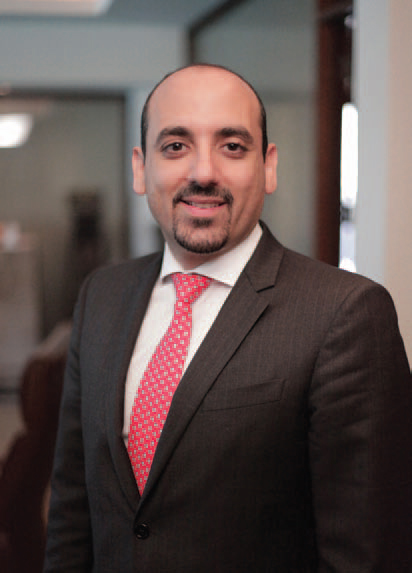
Similarly, at Majid Al Futtaim, Laura Ford, senior treasury manager, points out that much depends on the nature of a company, its size and geographic coverage.
“There are different levels of treasury centralisation that can be achieved, and many companies in the region are somewhere along that route,” she says. “Full centralisation involves having an in-house bank, but not all companies want to go that far. Like many other companies, we are about half way down the road towards total centralisation.”
She explains that Majid Al Futtaim has fully centralised eight aspects of its treasury operations, including capital structure management, funding and investment, capital allocation, financial risk management, liquidity management, counterparty relationship, cash management and information management.
However, certain operational activities such as payments and bank reconciliation have remained decentralised.
“There was a conscious decision to leave operational day-to-day activities within the businesses. However, the centralised treasury does play an advisory role for treasury activities that are still in the businesses by making process recommendations and advising on best practice.”

Leapfrogging technology
One of the most interesting aspects of the current movement towards centralisation and automation in the Middle East is that regional corporates are in a strong position to move their treasury operations directly from paper-based processes and spreadsheets to using the latest, state-of the-art treasury technologies.
Khoury explains that centralisation can go hand in hand with the adoption of the full automation capabilities of a Treasury Management Solution (TMS).
“There are definitely companies that have recognised the benefits of leapfrogging technologies by moving from manual treasury processes to making a major investment in a TMS,” he says.
And Coleman adds, “For those many corporate treasuries in other parts of the world that were using legacy systems, deploying a TMS called for a major migration project and the co-existence of separate solutions for a period of time. Essentially, Middle Eastern companies putting a TMS in place can look at this as a greenfield situation – there are no legacy systems to manage out.”
He points out that a number of leading Middle Eastern companies have been front runners in the deployment of IT2’s treasury management system, including Saudi Arabia’s Al Faisaliah Group, which has been using it for cash management and treasury functions for several years.
In 2009, Abu Dhabi-based Etihad Airways also deployed the system for treasury activities ranging from domestic and international cash management to long-term finance, trade finance, interest rate and FX risk management and treasury accounting.
Both companies have integrated their treasury solutions with other systems, including their Enterprise Resource Planning (ERP) systems.
However, at Majid Al Futtaim, which went live with a new TMS only last year, Ford notes that other options are available to companies seeking greater automation of their treasury operations.
“A lot of companies in the region are using Enterprise Resource Planning (ERP) systems with different levels of sophistication, and there are different ways in which they can automate their treasury infrastructure – one of which is to use the treasury modules made available from ERP solution providers such as Oracle and SAP,” she explains. “There are also bank solutions available, such as liquidity forecasting solutions, which were traditionally TMS tools.”
Majid Al Futtaim’s treasury centralisation and automation project began in 2008 with an evaluation of its existing processes and a full analysis of its requirements, followed by vendor selection, which resulted in its decision to invest in SunGard’s AvantGard Quantum.
“We opted for a standalone treasury solution because it met all our requirements. The outcome of our gap analysis revealed that our primary objectives were to achieve standardisation and efficiency and create a strong control environment,” explains Ford.
“The implementation of the TMS has benefitted all our processes – and it has increased transparency, accuracy and control.”
The benefits
For Middle Eastern companies that do centralise and automate their treasury operations, investment in a TMS can bring improved visibility into, and more efficient management of, a range of core treasury activities from cash management and cash forecasting to funding and risk management.
“The core treasury functions to benefit from the deployment of a TMS include cash management, because it brings increased visibility, and cash position reporting, as well as FX risk management, because a TMS improves visibility into FX exposures and can execute hedges,” says Coleman, pointing out that a TMS can also improve the forecasting of future funding requirements, and meeting those requirements, as well as interest rate hedging.
“A key benefit of a TMS is that it allows the automation and integration of these treasury functions in a controlled environment,” he continues, emphasising that it is harder to achieve a “controlled environment” when a company’s treasury activities lie in separate business units.
Meanwhile, Khoury identifies the real-time tracking of cash positions across multiple operations and improved cash forecasting as key advantages. A TMS can also eliminate the need for a group’s subsidiaries to hold several banks’ accounts at local level, and can cut the time and costs involved in managing multiple bank relationships.
“In a decentralised model, where a subsidiary requires funding, it either has to approach its holding company or go to a bank for a loan. In a centralised model, it is much easier to move cash around the organisation to where it is needed most,” he says.
“A TMS also enables corporates to better manage costs by reducing the number of accounts they have with different banks and also more efficiently managing the multiple relationships they have with banks,” he adds, pointing out that the cost of managing a relationship with one bank can be as high as $45,000 a year.
Improved connectivity
Corporates that deploy a TMS can also anticipate major improvements in connectivity, and take advantage of modern-day, multi-bank communication standards such as SWIFT for Corporates.
At Majid Al Futtaim, the TMS project, which was rolled out in two phases, culminated in 2011 with the centralised treasury solution’s connection to the group’s banking partners, via SWIFT, and its connection to the group’s ERP system.
“Previously, we relied heavily on manual operations and processes – but now we have a TMS at the core of our treasury operations, which is fully integrated with our banks on one side – and our ERP system on the other,” says Ford. “It means that our full treasury lifecycle is now automated via the one system.”
“A TMS brings huge improvements to connectivity, starting with bank partners, enabling treasurers to gain more visibility into their cash positions with banks and receive bank reports,” concludes Coleman. “It also improves connectivity with business units and allows greater visibility into individual business units’ own forecasts so that the centralised treasury can take a view on their cash positions and FX exposures.”
Supporting growth
Having a centralised TMS can also play a big role in supporting companies’ international expansion plans, and this is likely to be a major driver now for many Middle Eastern companies today as they seek to grow their businesses outside the region.
“It is inevitable that for any company seeking to expand that there need to be systems in place to support that growth. A company can always supplement its treasury operations with different spreadsheets and multiple portals, but only a TMS can provide the automation – and control – required to support strong growth,” says Ford, pointing out that many Middle Eastern companies are now following the example set by early adopters. n
box out
Al Gurg Group cuts costs with a TMS
Last year, the Easa Saleh Al Gurg Group in the UAE went live with a centralised, automated treasury solution in a major project aimed at replacing manual processes with automation and improving the efficiency of the its treasury and cash management operations.
Abdulla Al Gurg, group general manager, points out that one of the key reasons why the group selected SunGard AvantGard Treasury was to develop an in-house bank.
He explains that, previously, the Easa Saleh Al Gurg Group’s 23 companies were maintaining their own bank accounts and bank relationships. Centralising this function at group level has enabled the company to obtain greater visibility and control over treasury and cash management, and is also helping it to reduce operational costs and optimise processes.
“We can already see how AvantGard is helping us automate more of our processes, introduce greater efficiency into treasury management and reduce costs through the centralisation of bank accounts and bank dealings,” says Al Gurg.
He adds that the group is also working on establishing a payments factory as well as the centralisation of its trade finance processes