
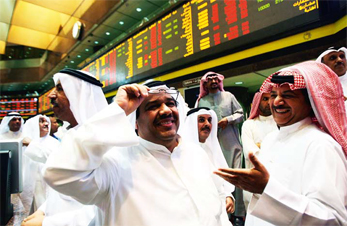
 Trade finance has been caught in the crossfire of the global economic crisis, both as a symbol of its extensive reach and as a vital piece of the solution.
BY Alexander R. Malaket , CITP, President OPUS Advisory Services International Inc .
The business of trade finance has been through one of the most dynamic, innovative periods in its evolution as technology has emerged to fulfil its early promise. At the same time, bankers and trade financiers have actively sought to develop and deploy new business solutions in response to the needs of clients across the globe.
Just as these developments have been gaining momentum, trade finance finds itself at the centre of the global economic crisis, both as an illustration of the breadth of the crisis and as a key element of its eventual resolution.Global sourcing patterns have changed significantly over the past decade, with China becoming a major manufacturer and supplier, and global retailers such as Wal-Mart, Carrefour and Zara exercising increasing influence on their supply chains. These changing realities were closely followed by a shift from traditional trade finance products to open account and supply chain-related solutions.
These tend to be less complex and costly for customers (also less secure) but, perhaps more critically, significantly less profitable for trade finance providers. The shift to open account and supply chain solutions was observed across the globe, even in regions – and with trading partners – previously considered too risky for such terms. The Middle East, where documentary credit and other traditional solutions have enjoyed relatively consistent market demand, was caught in the wave of innovation, and is working to develop new variations to open account, supply chains and working capital solutions. Almost in parallel, leading financial institutions worked to integrate certain related lines of business such as trade finance and cash management, as well as correspondent banking, under broadly mandated global transaction banking units.
Hedge funds also saw great potential in financing short-term trade, particularly in then-lucrative emerging markets. These realities, coupled with ongoing global consolidation in the financial sector, and a pattern of profit compression in trade banking, motivated senior bank executives to seek ways to “re-intermediate” themselves, with enhanced profit, into the business of international trade. The current global crisis has reinforced the attractiveness of trade finance as a line of business, particularly given its countercyclical nature, and has generated both attractive returns and a positive profile for business.
In short, these have been transformational times in trade finance, and that reality will endure beyond the current global crisis. The current financial downturn has also highlighted and amplified the interest, developing for some time, in Islamic banking and Islamic trade finance.
American and European authorities have sought to improve understanding of the stewardship dimensions of Islamic banking and to appreciate the characteristics that have effectively served to screen those institutions from the fundamental drivers of the crisis.
The demise of the documentary letter of credit was predicted and promised for many years, to the chagrin of long-time bankers, and the anticipation of importers and exporters across the globe.
Trade finance has been caught in the crossfire of the global economic crisis, both as a symbol of its extensive reach and as a vital piece of the solution.
BY Alexander R. Malaket , CITP, President OPUS Advisory Services International Inc .
The business of trade finance has been through one of the most dynamic, innovative periods in its evolution as technology has emerged to fulfil its early promise. At the same time, bankers and trade financiers have actively sought to develop and deploy new business solutions in response to the needs of clients across the globe.
Just as these developments have been gaining momentum, trade finance finds itself at the centre of the global economic crisis, both as an illustration of the breadth of the crisis and as a key element of its eventual resolution.Global sourcing patterns have changed significantly over the past decade, with China becoming a major manufacturer and supplier, and global retailers such as Wal-Mart, Carrefour and Zara exercising increasing influence on their supply chains. These changing realities were closely followed by a shift from traditional trade finance products to open account and supply chain-related solutions.
These tend to be less complex and costly for customers (also less secure) but, perhaps more critically, significantly less profitable for trade finance providers. The shift to open account and supply chain solutions was observed across the globe, even in regions – and with trading partners – previously considered too risky for such terms. The Middle East, where documentary credit and other traditional solutions have enjoyed relatively consistent market demand, was caught in the wave of innovation, and is working to develop new variations to open account, supply chains and working capital solutions. Almost in parallel, leading financial institutions worked to integrate certain related lines of business such as trade finance and cash management, as well as correspondent banking, under broadly mandated global transaction banking units.
Hedge funds also saw great potential in financing short-term trade, particularly in then-lucrative emerging markets. These realities, coupled with ongoing global consolidation in the financial sector, and a pattern of profit compression in trade banking, motivated senior bank executives to seek ways to “re-intermediate” themselves, with enhanced profit, into the business of international trade. The current global crisis has reinforced the attractiveness of trade finance as a line of business, particularly given its countercyclical nature, and has generated both attractive returns and a positive profile for business.
In short, these have been transformational times in trade finance, and that reality will endure beyond the current global crisis. The current financial downturn has also highlighted and amplified the interest, developing for some time, in Islamic banking and Islamic trade finance.
American and European authorities have sought to improve understanding of the stewardship dimensions of Islamic banking and to appreciate the characteristics that have effectively served to screen those institutions from the fundamental drivers of the crisis.
The demise of the documentary letter of credit was predicted and promised for many years, to the chagrin of long-time bankers, and the anticipation of importers and exporters across the globe.
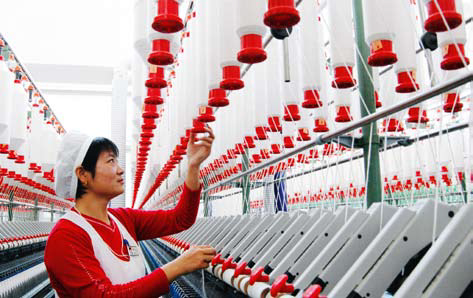
Operationally, trade finance has also shown signs of evolution. Trade bank operations have, in Cash & Trade’s view, long been under-valued and underestimated by financial institutions, and by the market, largely the failure of trade specialists in communicating the value contributed by operations teams in the trade finance equation.
The question of a lack of transactional skill among front-line relationship managers must also be addressed.
The shifting landscape of banking, including trade finance, which includes large mergers and an exit of numerous institutions from the trade business, will only partially mitigate this challenge.
Long training cycles (typically three to five years) persist due to the inefficient ‘learn on the job’ approach adopted by many operations managers. This combines with the ageing nature of the trade operations labour pool worldwide, and the lack of new entrants into the trade back office, to create an ongoing resource issue. The shortage has been widely acknowledged as an area of concern across the globe, from the Americas and Europe to trade powerhouses in Asia and the Middle East.
 The situation may have been mitigated to some degree by ongoing financial sector consolidation and the exit of some institutions from the international arena. However, over the longer term, the skills and resource issue will remain on the horizon. Even the advances in automating certain aspects of documentary operations will not sufficiently offset the resource issue. Markets seeking to establish or maintain a serious capability in trade will look to access these increasingly rare resources.
Until recently, human capital management and maintenance were identified as the most critical challenges faced by trade bank executives. The experience in the GCC region is typical: unstable staffing and resourcing in banking, including trade finance, coupled with regular, significant increases in salary scales as financial institutions scrambled to retain staff at all levels, or sought to hire them away from competing institutions.
On a global level, including in key markets across the Middle East, the cost of maintaining an operational capability in trade finance remains a critical question for senior managers. In addition to high fixed costs related to staffing, the escalating costs of implementing and maintaining trade-related technology are often a ‘make-or-break’ factor in management decisions.
The question of how best to handle trade operations has been part of the landscape for over 15 years; operational centralisation, followed by a wave of outsourcing arrangements, with a few players succeeding in developing a business around trade processing. The outsourcing question will remain central to the future of trade bank operations.
Trade bank clients have seen their business and the competitive landscape reshaped over the last two to three years, and again over the course of the current economic crisis.
Sourcing patterns have changed irrevocably, with international exporters increasingly engaged in import activities to source components or inputs to production, and foreign investment linking increasingly closely with trade activities. This idea of closely related import, export and investment activity has been referred to as ‘integrative trade’.
For markets such as Dubai and Hong Kong, long skilled in re-export activities, this concept is perhaps not so new. However, its implications across the globe are significant, and have reshaped expectations in the trade finance sector.
Trade bank clients, from SMEs to corporate multinationals, continue to require each of the four major solutions provided by trade finance specialists: payment facilitation, risk mitigation, financing and the provision of timely (and increasingly detailed) information.
As business shifted to open account, the risk mitigation element was de-emphasised. However, recent events have brought this dimension to the forefront of the trade finance value proposition. Additionally, the provision of information – about a particular shipment or about payment status, for example – has become increasingly valued. Clients, from SMEs to large corporates, are looking for near justin- time information about every aspect of their trade activities, to the point that multi-bank systems have gained traction over the past 18 months.
Much in the way that customer expectations in the area of cash management have evolved to raise the demands on service providers, clients engaged in international trade are seeking greater value: enhanced expertise and advisory support, more effective technology, and faster response in areas ranging from credit approvals to document-checking, to transaction settlement.
Companies such as TradeBeam and its Global Trade Management model, which covers everything from logistics to compliance to financing, or TradeCard, one of the early pioneers in the replacement of paper-based trade with electronic documentation and event-triggered decisionmaking, continue to stretch the boundaries in terms of application of technology to trade finance.
Technology providers that previously focused on payments solutions are now active in the trade finance space; other organisations such as Bolero, a UK-headquartered firm first established with the active participation of SWIFT (which still retains a small equity stake in the company) has been developing and deploying a multi-banking solution sought by more and more trade bank clients.

Technology in trade finance has finally reached a certain maturity: it has enabled the beginnings of a transformational period in the industry, as its serves both trade finance providers and ultimate customers. Global trade is set to slow for the first time in decades. The financial crisis that has engulfed the globe includes a shortage of trade finance, the depths of which are unclear, even as some providers reap record profits. With a $250bn injection targeted at trade finance and with the primary engines of the global economy (the United States and China) both profoundly in need of a healthy global trading environment, trade finance will retain significant profile among policymakers, bank executives and corporate leaders.
Trade will be one of the forces to pull the global economy out of its current tailspin, and trade finance, as a business, can take the opportunity to do two things simultaneously: demonstrate the effective and valuable functions of its traditional instruments and solutions, while concurrently innovating to position for the postcrisis economic and commercial order.
While traditional leaders such as the US , the UK, Europe and parts of Asia suffer the crisis and work to recover – sometimes by retrenching domestically – other markets such as Canada and the Middle East, by virtue of some unique features of their respective trade and financial environments, can extend their influence beyond its current state.
Similarly, financial institutions in the Middle East, particularly those governed under principles of Islamic finance and Shari’a Law, have attracted positive attention from various quarters, as a direct result of the relative health of the financial sector in the region.
Success in finding opportunity in the current crisis will create a competitive advantage that will last well into the recovery phase. It is from the ashes of the current turbulence that a new economic environment will rise.